
Tag: automatic saving

  • How Much Should You Automatically Save Each Month? (Real Numbers Guide)

    How Much Should You Automatically Save Each Month? (Real Numbers Guide)

    Most people don’t fail at saving because they’re lazy.

    They fail because they don’t know how much is “right.”

    Save too little → nothing changes.
    Save too much → you quit.

    So the real question is:

    How much should you automatically save every month?


    The wrong way to think about saving

    Most people start like this:

    “I’ll save whatever I can.”

    That sounds flexible, but in reality, it means:

    You save nothing consistently.

    Because saving becomes optional.

    And optional things don’t last.


    The real rule: percentage, not emotion

    Instead of guessing, use a simple structure.

    Here’s a realistic breakdown:

    • Beginner: 5% of your income
    • Stable: 10% of your income
    • Aggressive: 15–20%

    Example:

    • $2,000 income → $100 (5%)
    • $3,000 income → $300 (10%)
    • $5,000 income → $750 (15%)

    The goal isn’t perfection.

    It’s consistency.


    Start smaller than you think

    This is where most people mess up.

    They try to save too much too fast.

    Then they feel pressure.

    Then they stop.

    A better approach:

    • Start with something easy ($20, $50, $100)
    • Make it automatic
    • Forget about it

    Small amounts that run every month
    beat big plans that fail.

    How Automatic Saving Works


    Your lifestyle matters more than your income

    Two people can earn the same money
    and have completely different results.

    Why?

    Because of fixed expenses.

    • Rent
    • Debt
    • Subscriptions
    • Daily habits

    That’s why your saving number should feel:

    👉 slightly uncomfortable, but sustainable

    Not painful.


    The simple formula anyone can follow

    If you don’t want to think too much, use this:

    Step 1: Start with 5%
    Step 2: Run it automatically
    Step 3: Increase every 2–4 weeks

    Example:

    • Month 1 → 5%
    • Month 2 → 7%
    • Month 3 → 10%

    No stress. No burnout.


    What changed for me

    I used to spend around $10 every month on an online game.

    It felt like nothing.

    But after I saved my first $1,000, I realized something:

    That money wasn’t small.

    It was automatic.

    So I made one simple switch.

    I didn’t stop it.

    I redirected it.

    Now that same $10 goes into my savings every month.

    No effort. No thinking.

    And that’s when it finally started working.


    ⚠️ Quick Reality Check (Stay Here for 10 Seconds)

    Answer this honestly:

    • Do you know your exact saving percentage?
    • Or are you guessing every month?

    If you’re guessing,
    you don’t have a system yet.


    Why this works

    Saving isn’t about motivation.

    It’s about removing decisions.

    Once your number is clear,
    everything becomes easier.

    You don’t debate.

    You just follow the system.


    What’s next

    Now you know how much to save.

    But there’s a bigger question:

    Where should that money go?

    Savings account?
    Investments?
    Something else?

    I’ll break that down next.


    Conclusion

    You don’t need the perfect number.

    You need a number that runs every month.

    Start small.
    Stay consistent.
    Increase slowly.

    That’s how saving actually works.
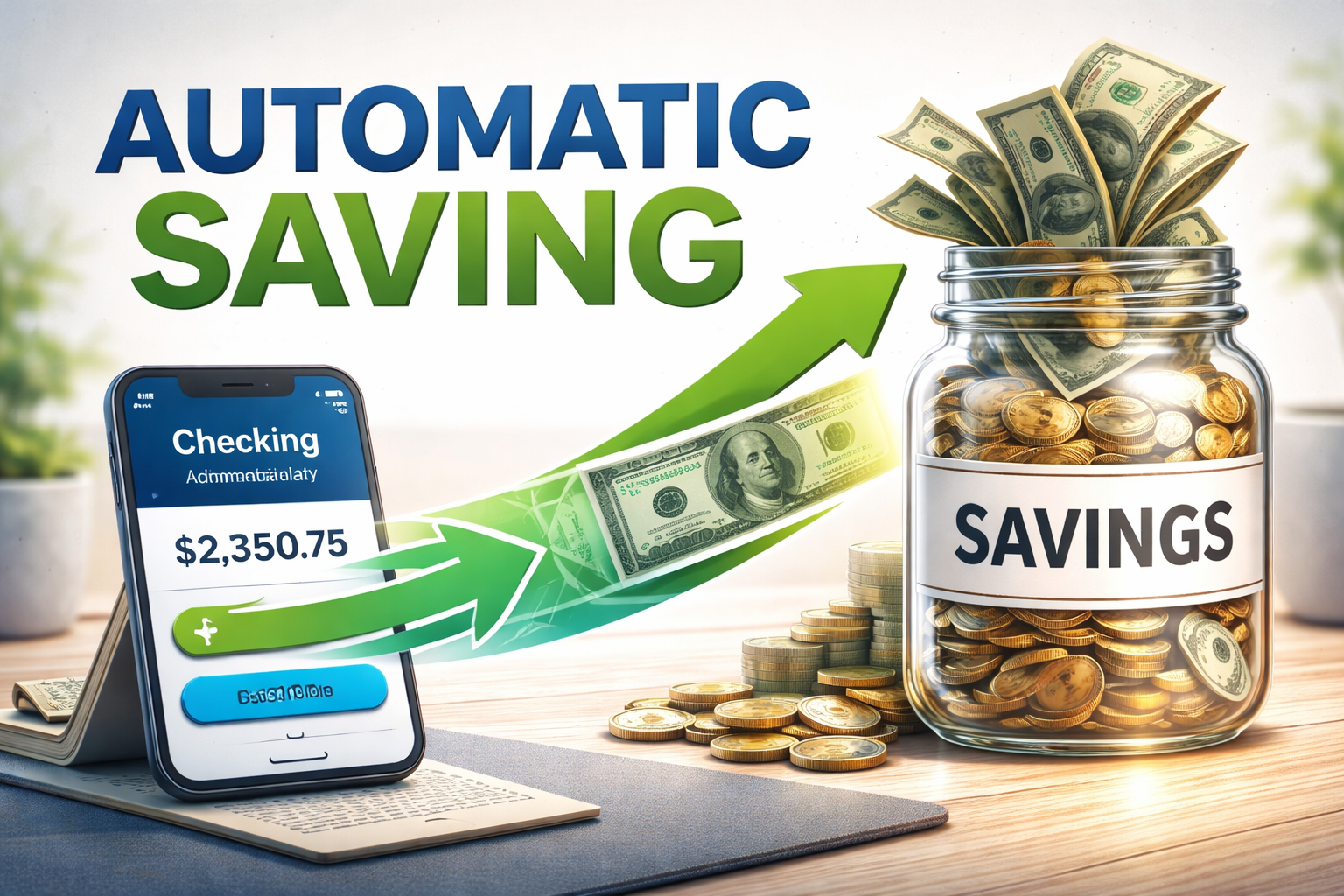
  • How Automatic Saving Works (And Why It Changes Everything)

    How Automatic Saving Works (And Why It Changes Everything)

    Most people think saving money is about discipline.

    It’s not.

    It’s about structure.

    Because the truth is simple:

    If saving depends on willpower, it won’t last.


    Why most people fail to save

    People usually say:

    “I’ll save what’s left at the end of the month.”

    But there’s one problem.

    There’s never anything left.

    Expenses expand.
    Small purchases add up.
    Unexpected things happen.

    So saving gets delayed… again and again.

    Not because you’re lazy —
    but because your system is broken.


    The real shift: Save first

    There’s one rule that changes everything:

    Save first. Spend what’s left.

    Not the other way around.

    And the easiest way to do that?

    Make it automatic.


    How automatic saving actually works

    Automatic saving removes the hardest part:

    Deciding every time.

    Money comes in → money moves out → you live on the rest.

    No thinking.
    No debating.
    No “I’ll do it next month.”


    How to set it up (step-by-step)

    1. Create two accounts

    You need separation.

    • Main account (income comes here)
    • Savings account (you don’t touch)

    Same bank is fine.
    Different bank is even better.


    2. Set up automatic transfer

    Go into your banking app and find:

    • Transfer
    • Scheduled transfer
    • Auto transfer

    Set it like this:

    • From: main account
    • To: savings account
    • Date: right after payday
    • Amount: start small ($10 ~ $100)


    3. Start smaller than you think

    Don’t try to be impressive.

    Try to be consistent.

    Even $10 works.

    Because the goal is not the amount —
    it’s the habit running without effort.


    4. Make it harder to touch

    This matters more than people think.

    • Don’t link a debit card
    • Don’t check it daily
    • Don’t treat it like spending money

    If it’s easy to access,
    you will use it.


    5. Increase slowly

    After a few weeks:

    • Increase a little
    • Example: $50 → $70 → $100

    No pressure.
    Just progression.

    If saving still feels hard, start here:

    https://simplecostlife.com/how-to-grow-money-after-first-1000


    Real ways people do this

    You don’t need anything complicated.

    Here are simple options:


    Separate savings account

    Basic but powerful.

    Money moves automatically every payday.

    You don’t see it.
    You don’t touch it.


    High-yield savings account

    Your money earns interest while sitting.

    Safe.
    Simple.
    Better than doing nothing.


    Auto-saving apps

    Some apps automate everything.

    • Acorns → rounds up purchases
    • Chime → auto-save features
    • Oportun → moves money automatically

    You barely notice it happening.

    That’s the point.


    Automatic investing (next level)

    Once you’re comfortable:

    • Set monthly investment
    • Example: $50/month into index funds

    No timing.
    No guessing.

    Just consistency.


    What changed for me

    I used to spend about $10 every month on an online game.

    At the time, it felt like nothing.

    But after I saved my first $1,000, I started paying attention.

    That small, automatic expense had been running for months
    without me even noticing.

    So I made a simple change.

    I didn’t just stop it.

    I redirected it.

    Now, that same $10 moves automatically into my savings every month.

    I don’t think about it anymore.

    And that’s exactly why it works.


    Stop and think (important)

    Quick check:

    Is your saving automatic?

    Or are you deciding every month?

    If you have to think about it,
    you’re already losing.


    Why this works

    Automatic saving removes effort.

    And effort is where most people fail.

    You don’t need motivation.
    You don’t need discipline.

    You need a system that runs without you.


    What’s next

    Setting up automatic saving is just the beginning.

    The next step is knowing how much to automate
    without hurting your lifestyle.

    I’ll break that down in the next post.


    Conclusion

    You don’t save money by trying harder.

    You save money by removing the need to try at all.

    Set it once.
    Let it run.

    And watch what happens.