Most people don’t realize this, but it’s not the big purchases that keep them broke.
It’s the small ones.
The daily coffee.
The random food delivery.
The “it’s only $5” mindset.
Individually, they feel harmless.
Together, they quietly destroy your financial future.
The Biggest Lie About Money
People think:
“I don’t spend that much.”
And they’re technically right.
You don’t spend a lot at once.
You spend a little… over and over again.
That’s the real problem.
Small expenses don’t feel dangerous.
So your brain ignores them.
The Coffee Trap (Real Example)
Let’s break it down:
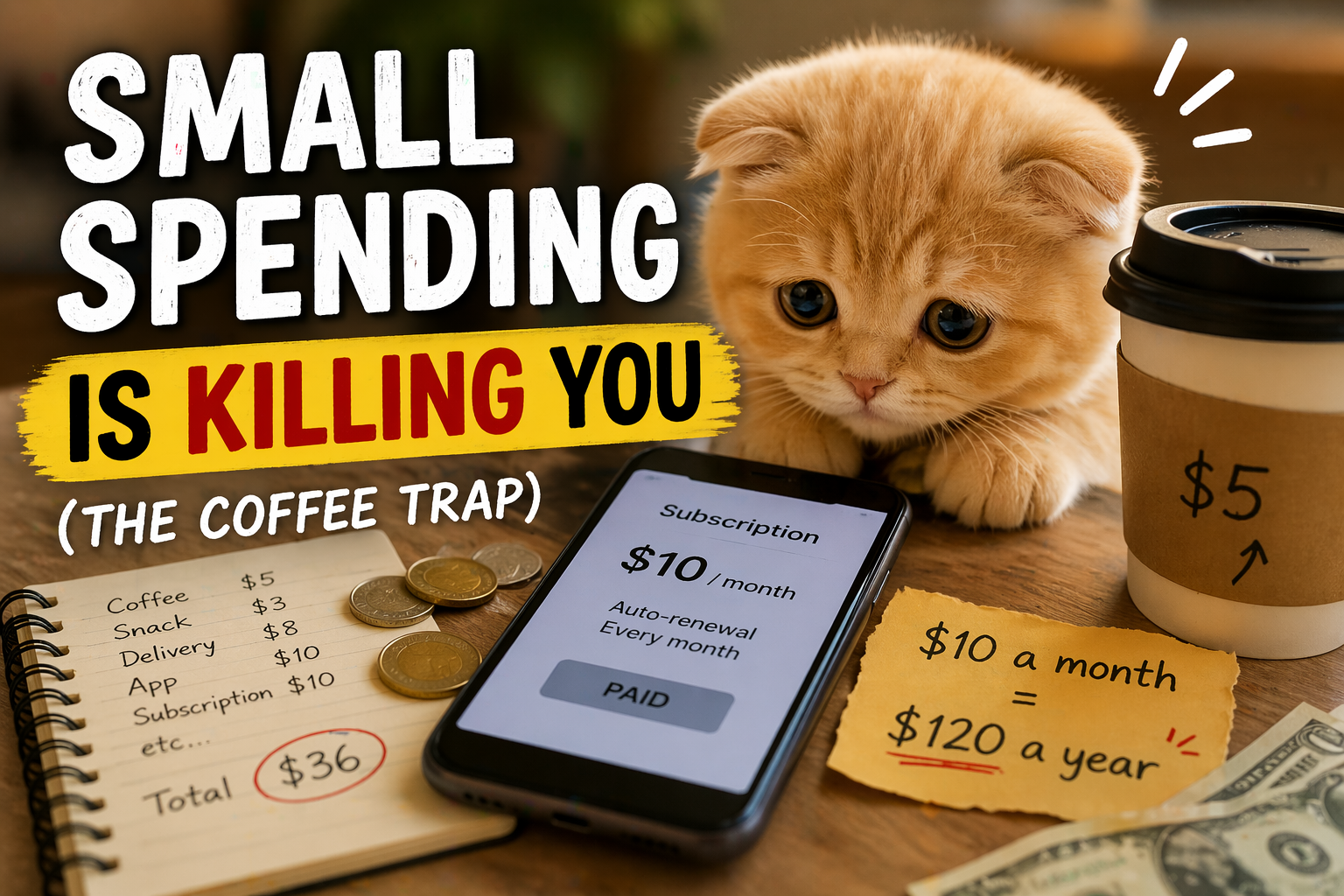
$5 coffee per day
= $150 per month
= $1,800 per year
Now stretch that over time:
It becomes a serious amount of money.
And coffee is just one example.
The Subscription Trap (Real Story)
There was a point where I realized something uncomfortable.
I was paying $10 every month for a digital service I wasn’t even using.
At first, it didn’t feel like a big deal.
Ten dollars is nothing, right?
That’s exactly how it starts.
These platforms are designed this way.
They push automatic billing because they know most people won’t check.
If you don’t pay attention, the money just keeps leaving your account.
Quietly. Repeatedly.
And that’s what happened to me.
I wasn’t actively choosing to spend money.
I was just… not stopping it.
Now think about it.
$10 a month doesn’t feel like much.
But over a year, that’s $120.
Would you willingly pay $120 for something you don’t even use?
Probably not.
But that’s exactly what I was doing.
If this feels familiar, you’re not alone.
Many people don’t even realize how often they spend without thinking
Why Small Spending Is More Dangerous Than Big Spending
Big purchases make you think.
Small purchases make you react.
And reacting is where money disappears.
Small spending feels invisible.
That’s why it’s dangerous.
The Real Problem Isn’t Coffee
Coffee isn’t the problem.
Subscriptions aren’t the problem.
The real problem is this mindset:
“I can afford this.”
Yes, you can.
But can you afford it every day for the next year?
That’s the question most people never ask.
How to Fix It (Simple Method)
You don’t need to stop spending.
You need to become aware.
Start with this:
- Track every expense for 7 days
- Add everything at the end
- Look at the total
Then:
- Cut what you don’t value
- Keep what actually matters
That’s how real saving begins.
Final Truth
People don’t go broke overnight.
They go broke slowly.
One small decision at a time.