Tag: financial planning

  • The 50/30/20 Rule Explained (And Why It Doesn’t Work for Everyone)

    The 50/30/20 Rule Explained (And Why It Doesn’t Work for Everyone)

    The 50/30/20 rule is one of the most popular budgeting methods.

    It sounds simple.

    It sounds smart.

    But here’s the truth:

    It doesn’t work for everyone.


    What is the 50/30/20 rule?

    It divides your income into three parts:

    • 50% → Needs (rent, bills, groceries)
    • 30% → Wants (entertainment, eating out)
    • 20% → Savings

    That’s it.

    No apps. No complicated tracking.

    Just a simple structure.


    Why people like it

    Because it feels balanced.

    You’re not cutting everything.

    You’re not forcing extreme saving.

    You’re just organizing your money.


    The problem nobody talks about

    This rule assumes one thing:

    👉 Your expenses fit into neat percentages.

    But in real life, they don’t.


    Example (real situation)

    Let’s say you make $2,000/month.

    According to the rule:

    • Needs → $1,000
    • Wants → $600
    • Savings → $400

    Sounds good.

    But what if:

    • Your rent alone is $1,200?

    The system breaks instantly.

    How Much Should You Save Each Month?


    Why it fails for many people

    1. Fixed costs are too high

    Rent, debt, bills.

    These don’t adjust easily.


    2. Income is inconsistent

    Freelancers, business owners, part-time workers.

    Monthly percentages don’t stay stable.


    3. It ignores behavior

    Budgeting isn’t math.

    It’s habit.

    You can follow percentages perfectly
    and still overspend.


    ⚠️ Quick Check (Don’t Skip)

    Think about your last month:

    Did your spending follow any structure?

    Or did it just happen?

    If it “just happened,”
    no rule will fix that.


    So should you ignore the 50/30/20 rule?

    No.

    But don’t follow it blindly.


    A better way to use it

    Instead of strict percentages:

    👉 Use it as a reference, not a rule.

    For example:

    • Needs → as low as possible
    • Savings → as high as sustainable
    • Wants → flexible


    What actually works better

    A simpler system:

    1. Pay yourself first (automatic saving)
    2. Cover essential expenses
    3. Spend what’s left

    No rigid numbers.

    Just a working structure.


    What changed for me

    I tried to follow a perfect system before.

    It didn’t last.

    Because my expenses didn’t fit the rule.

    But when I switched to automatic saving first,
    everything became easier.

    The structure mattered more than the percentages.


    Why this matters

    People fail not because budgeting is hard.

    They fail because they follow systems
    that don’t match their reality.


    What’s next

    If fixed percentages don’t work for you,

    👉 the next step is building a budget that actually fits your life.

    I’ll show you how in the next post.


    Conclusion

    The 50/30/20 rule is a good starting point.

    But it’s not the answer.

    Use it as a guide.

    Not as a rule you must follow.

  • How Much Should You Automatically Save Each Month? (Real Numbers Guide)

    How Much Should You Automatically Save Each Month? (Real Numbers Guide)

    Most people don’t fail at saving because they’re lazy.

    They fail because they don’t know how much is “right.”

    Save too little → nothing changes.
    Save too much → you quit.

    So the real question is:

    How much should you automatically save every month?


    The wrong way to think about saving

    Most people start like this:

    “I’ll save whatever I can.”

    That sounds flexible, but in reality, it means:

    You save nothing consistently.

    Because saving becomes optional.

    And optional things don’t last.


    The real rule: percentage, not emotion

    Instead of guessing, use a simple structure.

    Here’s a realistic breakdown:

    • Beginner: 5% of your income
    • Stable: 10% of your income
    • Aggressive: 15–20%

    Example:

    • $2,000 income → $100 (5%)
    • $3,000 income → $300 (10%)
    • $5,000 income → $750 (15%)

    The goal isn’t perfection.

    It’s consistency.


    Start smaller than you think

    This is where most people mess up.

    They try to save too much too fast.

    Then they feel pressure.

    Then they stop.

    A better approach:

    • Start with something easy ($20, $50, $100)
    • Make it automatic
    • Forget about it

    Small amounts that run every month
    beat big plans that fail.

    How Automatic Saving Works


    Your lifestyle matters more than your income

    Two people can earn the same money
    and have completely different results.

    Why?

    Because of fixed expenses.

    • Rent
    • Debt
    • Subscriptions
    • Daily habits

    That’s why your saving number should feel:

    👉 slightly uncomfortable, but sustainable

    Not painful.


    The simple formula anyone can follow

    If you don’t want to think too much, use this:

    Step 1: Start with 5%
    Step 2: Run it automatically
    Step 3: Increase every 2–4 weeks

    Example:

    • Month 1 → 5%
    • Month 2 → 7%
    • Month 3 → 10%

    No stress. No burnout.


    What changed for me

    I used to spend around $10 every month on an online game.

    It felt like nothing.

    But after I saved my first $1,000, I realized something:

    That money wasn’t small.

    It was automatic.

    So I made one simple switch.

    I didn’t stop it.

    I redirected it.

    Now that same $10 goes into my savings every month.

    No effort. No thinking.

    And that’s when it finally started working.


    ⚠️ Quick Reality Check (Stay Here for 10 Seconds)

    Answer this honestly:

    • Do you know your exact saving percentage?
    • Or are you guessing every month?

    If you’re guessing,
    you don’t have a system yet.


    Why this works

    Saving isn’t about motivation.

    It’s about removing decisions.

    Once your number is clear,
    everything becomes easier.

    You don’t debate.

    You just follow the system.


    What’s next

    Now you know how much to save.

    But there’s a bigger question:

    Where should that money go?

    Savings account?
    Investments?
    Something else?

    I’ll break that down next.


    Conclusion

    You don’t need the perfect number.

    You need a number that runs every month.

    Start small.
    Stay consistent.
    Increase slowly.

    That’s how saving actually works.

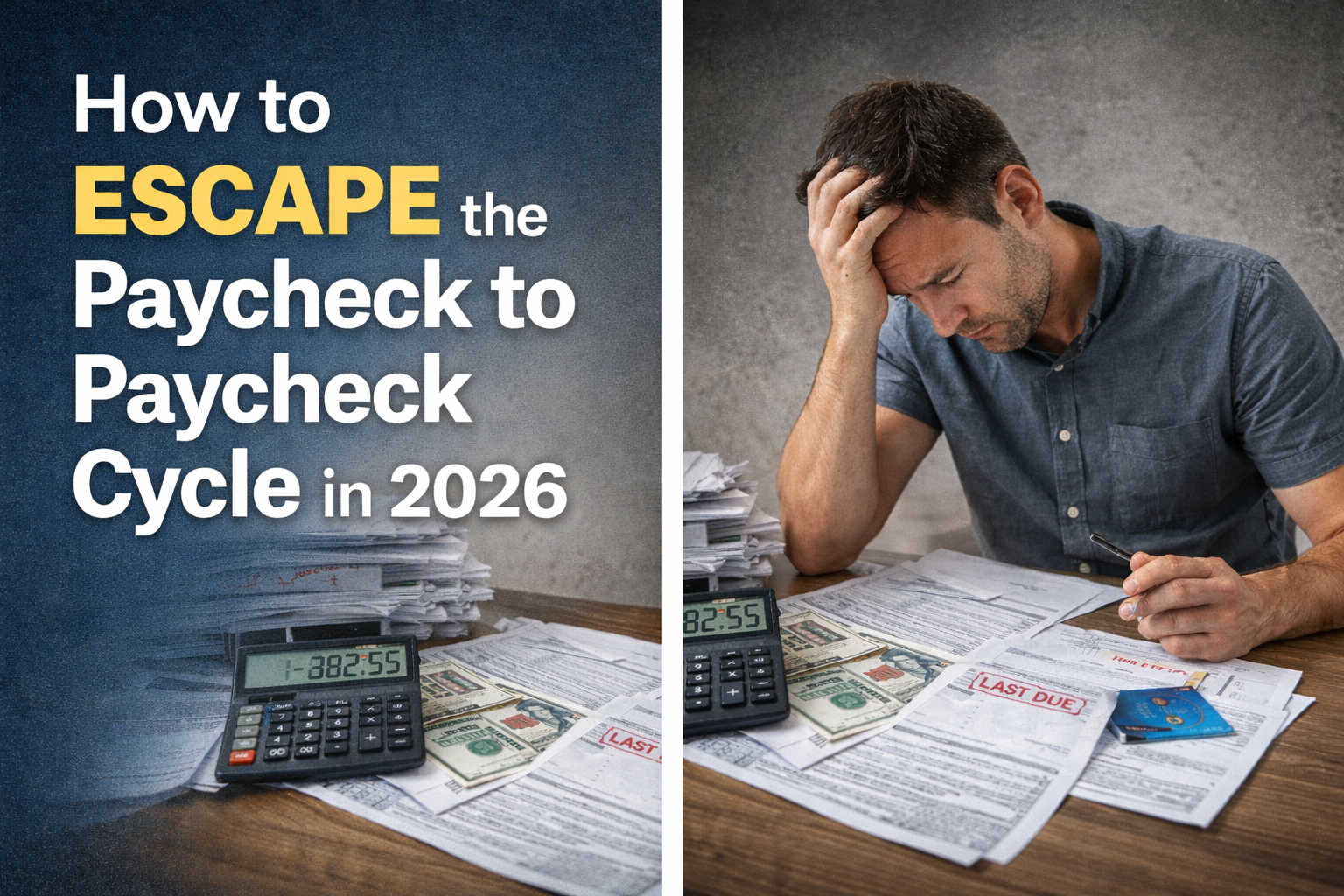
  • How to Escape the Paycheck to Paycheck Cycle in 2026 (Step-by-Step Plan That Actually Works)

    How to Escape the Paycheck to Paycheck Cycle in 2026 (Step-by-Step Plan That Actually Works)

    Introduction

    Most people know they are stuck living paycheck to paycheck.

    But knowing the problem isn’t enough.

    If you’ve tried saving money and still feel like nothing is changing, the issue isn’t your effort — it’s your system.

    In 2026, escaping financial stress requires a clear, structured plan.

    This guide will show you exactly how to break the paycheck to paycheck cycle step by step.

    If you’re stuck living paycheck to paycheck, the biggest problem isn’t income — it’s spending behavior.

    👉 Start here: How to Stop Impulse Spending (Even If You Have No Discipline)


    1. Understand Your Real Financial Situation

    Before you can fix anything, you need full clarity.

    Most people avoid checking their finances because it feels uncomfortable.

    But avoiding the truth is what keeps you stuck.

    Start with three simple numbers:

    • Total monthly income
    • Fixed expenses (rent, loans, subscriptions)
    • Variable expenses (food, shopping, lifestyle)

    Once you see the full picture, you can start making real decisions.


    2. Cut Fixed Expenses First

    If you want fast results, don’t start with small savings.

    Start with the biggest expenses.

    Fixed costs are what lock you into the paycheck cycle.

    Focus on:

    • Rent or housing costs
    • Car payments
    • Monthly subscriptions

    Reducing these creates immediate financial breathing room.


    3. Build a Survival Budget

    Forget perfect budgeting.

    What you need is a survival system.

    A survival budget focuses only on essentials:

    • Housing
    • Food
    • Transportation
    • Basic bills

    Everything else is temporarily removed.

    This isn’t forever — it’s a reset.


    4. Create an Emergency Buffer

    Your first goal is not investing.

    It’s stability.

    Without savings, you are always one problem away from financial stress.

    Start small:

    • First goal: $500
    • Next goal: $1,000

    This buffer breaks your dependency on the next paycheck.


    5. Automate Your Finances

    Manual saving doesn’t work long-term.

    Automation does.

    Set up:

    • Automatic transfers to savings
    • Separate accounts for spending and saving
    • Fixed saving percentages

    This removes emotional decisions from your money.


    6. Increase Your Income Strategically

    Cutting expenses has limits.

    Income growth changes everything.

    Look for:

    • Side income opportunities
    • Skill upgrades
    • Better-paying jobs

    Even a small increase in income can accelerate your progress.


    7. Stay Consistent for 3 to 6 Months

    This is where most people fail.

    They start strong — then stop.

    Consistency is what creates results.

    Stick to the plan for at least 3 to 6 months.

    That’s when real change happens.


    Conclusion

    Escaping the paycheck to paycheck cycle is not about luck.

    It’s about structure, discipline, and consistency.

    If you follow this plan, you won’t just survive — you’ll build real financial stability.

  • Why You’re Still Living Paycheck to Paycheck in 2026 (Even With a Decent Salary)

    Why You’re Still Living Paycheck to Paycheck in 2026 (Even With a Decent Salary)

    You’re not broke because you don’t earn enough.

    That’s what most people believe — but in 2026, that’s rarely the real problem.

    There are people making $3,000 a month who manage to save.
    And there are people making $10,000 a month who still feel like they’re drowning.

    So what’s really going on?

    If you feel like your money disappears every month, this article will show you exactly why — and what to fix immediately.


    1. Lifestyle Inflation Is Killing You

    The moment your income increases, your spending increases too.

    You upgrade your phone.
    You move to a nicer apartment.
    You eat out more often.

    Before you realize it, your expenses grow just as fast as your income.

    This is called lifestyle inflation — and it keeps you stuck in the same financial position no matter how much you earn.


    2. You Don’t Track Your Money

    Most people have no idea where their money actually goes.

    They “feel” like they didn’t spend much — but small daily expenses add up fast.

    • Coffee
    • Food delivery
    • Subscriptions

    These don’t feel big individually, but together they destroy your cash flow.

    If you’re not tracking your spending, you’re guessing — and guessing always leads to overspending.


    3. Fixed Expenses Are Too High

    This is the real killer.

    Your rent, car payment, insurance, and subscriptions are quietly eating most of your income.

    And unlike small expenses, these are hard to change once you’re locked in.

    If your fixed costs are too high, no amount of budgeting will save you.


    4. You Rely on Your Next Paycheck

    Living paycheck to paycheck isn’t just about income.

    It’s about dependency.

    If one missed paycheck would break your finances, you’re already in a risky position.

    This creates constant stress — and prevents you from building real financial security.


    5. You Don’t Have a Financial System

    Saving money isn’t about motivation.

    It’s about systems.

    If you’re trying to “save whatever is left,” you’ll always fail.

    Instead, money should be automatically divided:

    • Spend
    • Save
    • Invest

    Without a system, your money will always disappear.


    6. You Confuse Wants With Needs

    Many people justify unnecessary spending as “needs.”

    • “I need a better phone.”
    • “I need this subscription.”
    • “I deserve this.”

    The truth is, most of these are wants.

    And they slowly keep you stuck.


    7. You’re Not Building Margin

    Financial stability comes from margin.

    Margin = income minus expenses.

    If that gap is too small, you’ll always feel broke — no matter how much you earn.


    Conclusion

    If you’re still living paycheck to paycheck in 2026, it’s not just about income.

    It’s about habits, systems, and awareness.

    Fix these, and your financial life will change faster than you expect.


  • How to Build an Emergency Fund Fast in 2026 (Even If You’re Starting From Zero)

    emergency fund savings concept with cash money and financial safety in 2026


    Unexpected expenses can happen anytime.

    A medical bill, a car repair, or a sudden financial problem can put you in a difficult situation if you don’t have savings.

    That’s why having an emergency fund is no longer optional in 2026 — it’s essential.


    Why an Emergency Fund Is So Important

    Many people focus only on earning or investing money.

    But what happens when something goes wrong?

    Without cash available, you’re forced to make bad decisions:

    • Taking high-interest loans
    • Selling assets at the wrong time
    • Stressing over every small expense

    An emergency fund protects you from all of this.


    A Personal Lesson About Cash Flow

    I learned this lesson the hard way.

    At one point, I focused too much on investing and put most of my money into one place.

    When things didn’t go as planned, I suddenly found myself with very little cash.

    That was one of the most difficult periods for me.

    Even worse, some of my investments were tied to real estate.

    And when the market slowed down, I couldn’t sell those properties easily.

    I had assets — but no cash.

    That’s when I truly understood:

    Cash is not optional. It’s necessary.


    How Much Should You Save?

    A common recommendation is:

    • Minimum: $500 to $1,000
    • Ideal: 3 to 6 months of living expenses

    But if you’re just starting, don’t worry about big numbers.

    Start small.

    Even $100 is better than nothing.


    Step 1: Start With a Small Target

    Don’t try to save thousands immediately.

    Set a simple goal:

    • First $100
    • Then $500
    • Then $1,000

    Small wins build momentum.


    Step 2: Automate Your Savings

    Make saving automatic.

    Set up a system where a portion of your income goes directly into a separate account.

    If you don’t see the money, you won’t spend it.


    Step 3: Use a Separate Account

    Keep your emergency fund separate from your daily spending money.

    This reduces the temptation to use it.

    Out of sight, out of mind.


    Step 4: Cut Just One Expense

    You don’t need to change everything.

    Start by cutting just one unnecessary expense:

    • One subscription
    • One habit
    • One weekly expense

    Redirect that money into your emergency fund.


    Step 5: Stay Consistent

    Building an emergency fund is not about speed.

    It’s about consistency.

    Even small amounts, saved regularly, will grow over time.


    Final Thoughts

    Many people think investing is the key to financial success.

    But without a solid cash foundation, even good investments can fail.

    From my own experience, having no cash during difficult times is far worse than having no investments.

    Start building your emergency fund today.

    Your future self will thank you.