Tag: how to save money

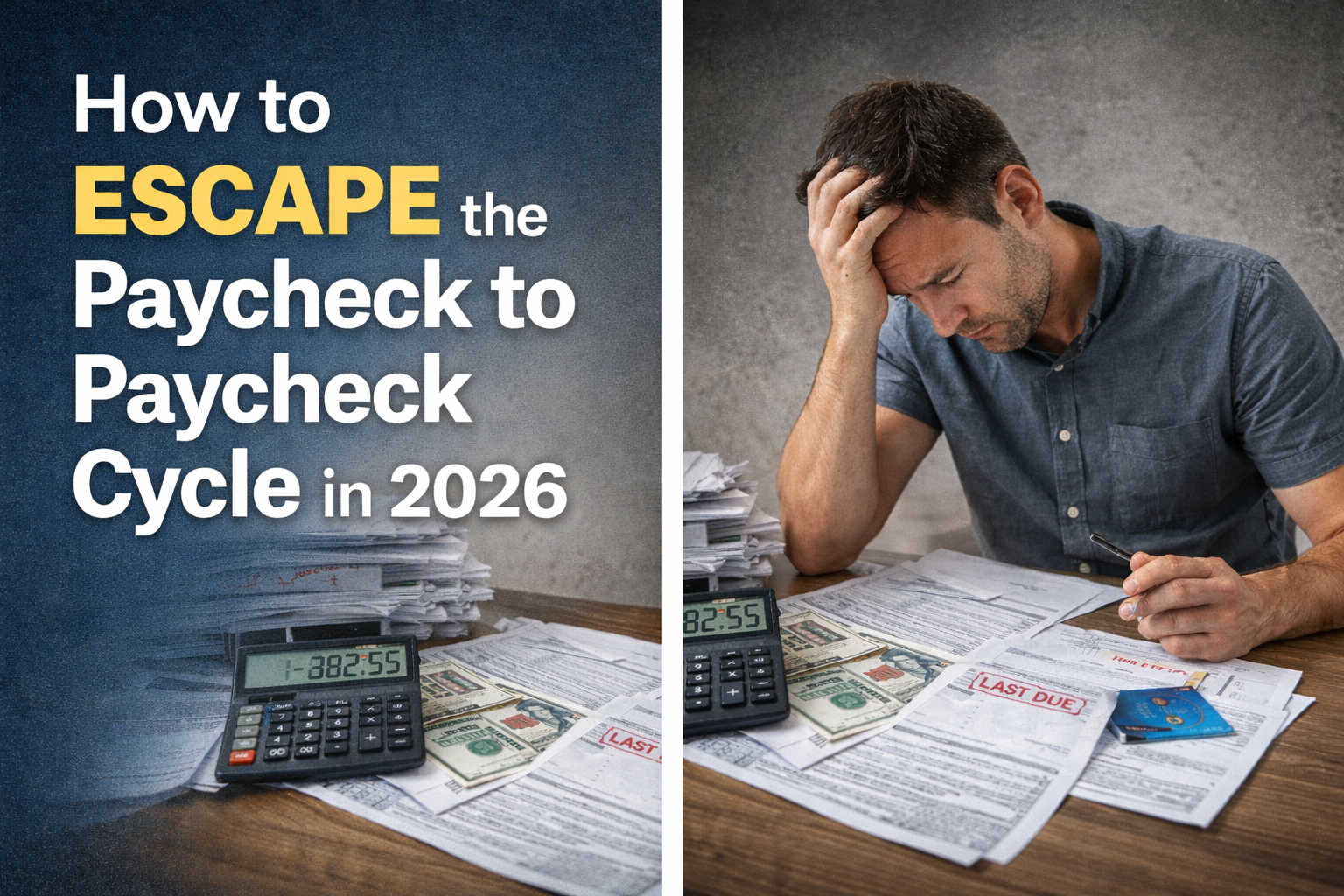
  • How to Escape the Paycheck to Paycheck Cycle in 2026 (Step-by-Step Plan That Actually Works)

    How to Escape the Paycheck to Paycheck Cycle in 2026 (Step-by-Step Plan That Actually Works)

    Introduction

    Most people know they are stuck living paycheck to paycheck.

    But knowing the problem isn’t enough.

    If you’ve tried saving money and still feel like nothing is changing, the issue isn’t your effort — it’s your system.

    In 2026, escaping financial stress requires a clear, structured plan.

    This guide will show you exactly how to break the paycheck to paycheck cycle step by step.

    If you’re stuck living paycheck to paycheck, the biggest problem isn’t income — it’s spending behavior.

    👉 Start here: How to Stop Impulse Spending (Even If You Have No Discipline)


    1. Understand Your Real Financial Situation

    Before you can fix anything, you need full clarity.

    Most people avoid checking their finances because it feels uncomfortable.

    But avoiding the truth is what keeps you stuck.

    Start with three simple numbers:

    • Total monthly income
    • Fixed expenses (rent, loans, subscriptions)
    • Variable expenses (food, shopping, lifestyle)

    Once you see the full picture, you can start making real decisions.


    2. Cut Fixed Expenses First

    If you want fast results, don’t start with small savings.

    Start with the biggest expenses.

    Fixed costs are what lock you into the paycheck cycle.

    Focus on:

    • Rent or housing costs
    • Car payments
    • Monthly subscriptions

    Reducing these creates immediate financial breathing room.


    3. Build a Survival Budget

    Forget perfect budgeting.

    What you need is a survival system.

    A survival budget focuses only on essentials:

    • Housing
    • Food
    • Transportation
    • Basic bills

    Everything else is temporarily removed.

    This isn’t forever — it’s a reset.


    4. Create an Emergency Buffer

    Your first goal is not investing.

    It’s stability.

    Without savings, you are always one problem away from financial stress.

    Start small:

    • First goal: $500
    • Next goal: $1,000

    This buffer breaks your dependency on the next paycheck.


    5. Automate Your Finances

    Manual saving doesn’t work long-term.

    Automation does.

    Set up:

    • Automatic transfers to savings
    • Separate accounts for spending and saving
    • Fixed saving percentages

    This removes emotional decisions from your money.


    6. Increase Your Income Strategically

    Cutting expenses has limits.

    Income growth changes everything.

    Look for:

    • Side income opportunities
    • Skill upgrades
    • Better-paying jobs

    Even a small increase in income can accelerate your progress.


    7. Stay Consistent for 3 to 6 Months

    This is where most people fail.

    They start strong — then stop.

    Consistency is what creates results.

    Stick to the plan for at least 3 to 6 months.

    That’s when real change happens.


    Conclusion

    Escaping the paycheck to paycheck cycle is not about luck.

    It’s about structure, discipline, and consistency.

    If you follow this plan, you won’t just survive — you’ll build real financial stability.
  • Why You’re Always Broke in 2026 (7 Money Habits That Are Draining Your Wallet)


    Money habits that waste money in 2026 and how to fix them

    Most people think the problem is low income. But in reality, it’s often small daily habits that quietly drain your money over time.

    If you feel like you’re always running out of money, you’re not alone.

    In 2026, the real challenge isn’t earning more — it’s stopping unnecessary money leaks.


    Why Small Habits Matter More Than You Think

    Many people ignore small expenses because they seem insignificant.

    But here’s the truth:

    Small spending, repeated daily, becomes a big financial problem.

    I learned this the hard way.


    1. Ignoring Small Subscriptions

    At one point, I had a Disney+ subscription.

    It was cheap, so I didn’t pay much attention to it. I barely used it, but I never canceled it.

    Three years later, I checked how much I had spent.

    It was a lot more than I expected.

    What felt like a small monthly payment turned into a surprisingly large amount over time.

    That’s the danger of ignoring “small” expenses.


    2. Buying Cheap Things Too Often

    Cheap items feel harmless.

    You see something for a few dollars and think, “It’s cheap, why not?”

    But this is where many people lose money.

    The cheaper the item, the easier it is to buy without thinking.

    And that’s exactly the problem.

    Buying many cheap things often costs more than buying fewer valuable things.


    3. Impulse Buying Without Thinking

    You see something, you like it, and you buy it immediately.

    No plan. No need. Just emotion.

    This habit slowly destroys your finances.

    A simple rule can help:

    Wait 24 hours before buying anything non-essential.

    Most of the time, you won’t even want it anymore.


    4. Eating Out Too Frequently

    Food is necessary.

    But eating out all the time is expensive.

    Ordering delivery or grabbing food outside may feel convenient, but it adds up fast.

    Cooking at home just a few more times per week can save a significant amount of money.


    5. Treating Coffee Like a Necessity

    Many people treat coffee as a daily essential.

    But it’s not.

    Buying coffee every day may seem small, but over time, it becomes a major expense.

    For example:

    Spending $5 a day on coffee equals about $150 per month.

    That’s money that could be saved or invested.


    6. Not Tracking Your Spending

    If you don’t know where your money is going, you can’t control it.

    Many people avoid checking their expenses because it feels uncomfortable.

    But ignoring it makes things worse.

    Even tracking your spending for just one week can completely change your awareness.


    7. Living Without a Budget

    Without a plan, money disappears.

    Budgeting doesn’t mean restriction.

    It means giving your money a direction.

    Even a simple weekly budget can help you stay in control and avoid unnecessary spending.


    A Personal Lesson About Money

    I once believed making money quickly was the key.

    I focused too much on growing money fast instead of managing it properly.

    That didn’t end well.

    What I learned is simple:

    It’s not just about making money — it’s about keeping it.

    And that starts with controlling your daily habits.


    How to Fix These Habits

    You don’t need to change everything at once.

    Start small:

    • Track your spending for a week
    • Cancel unused subscriptions
    • Apply the 24-hour rule
    • Set a simple weekly budget

    Small changes lead to big results.


    Final Thoughts

    Being broke is not always about income.

    It’s often about habits.

    If you can control small daily decisions, you can completely change your financial future.

    Start today.