Tag: impulse spending

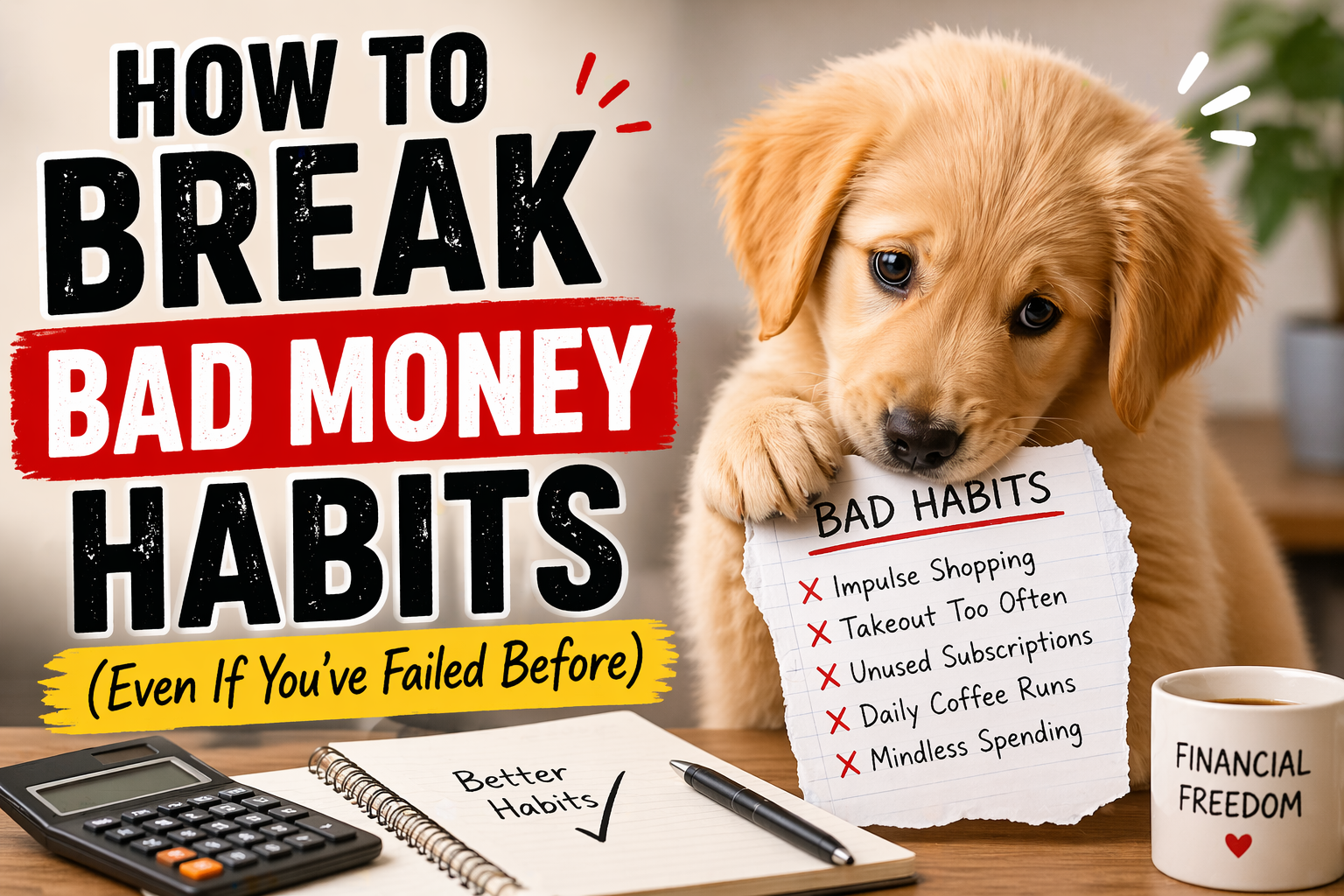
  • How to Break Bad Money Habits (Even If You’ve Failed Before)

    How to Break Bad Money Habits (Even If You’ve Failed Before)


    Most people don’t fail at saving money because they lack knowledge.

    They fail because of habits.

    You already know what to do.
    Spend less. Save more. Avoid unnecessary purchases.

    It’s not complicated.

    And yet, it doesn’t work.

    Not for long.


    The Real Problem Isn’t Knowledge

    If information alone worked, everyone would be financially stable.

    There are thousands of budgeting tips online.
    Endless advice about saving and investing.

    But people still struggle.

    Why?

    Because knowing something is completely different from doing it consistently.

    And consistency is controlled by habits.


    Why You Keep Falling Back

    You’ve probably experienced this before.

    You decide to change.

    You tell yourself:
    “I’ll stop spending money unnecessarily.”

    For a few days, maybe even a week, you do well.

    Then something small happens.

    You’re tired.
    You’re stressed.
    You just want something easy.

    And suddenly, you’re back to old spending patterns.

    Not because you decided to fail—
    but because your habits took over.


    My Realization (Personal Example)

    There was a time I noticed something strange.

    Every month, I was being charged $10 for a digital service I wasn’t even using.

    I didn’t actively sign up for it recently.
    I wasn’t opening the app.
    I didn’t even think about it.

    But the money kept going out.

    Automatically.

    At first, I ignored it.

    “It’s just $10.”

    That’s what I told myself.

    But then I stopped and actually calculated it.

    $10 a month becomes $120 a year.

    And I had been paying for it without even realizing it.

    That’s when it hit me.

    I wasn’t choosing to spend money.

    I was just not stopping it.

    That’s what bad money habits look like.

    They don’t feel like decisions.

    They feel invisible.


    Why Habits Are So Powerful

    Habits don’t require effort.

    They run automatically.

    That’s why they’re dangerous.

    Good intentions require energy.
    Habits don’t.

    When you’re tired or distracted, your brain defaults to what’s easiest.

    And for most people, that means spending.


    The Biggest Mistake People Make

    Most people try to fix their money problems with willpower.

    “I’ll just be more disciplined.”
    “I’ll try harder this time.”

    That approach almost always fails.

    Because willpower runs out.

    Especially after a long day, stress, or fatigue.

    You don’t need more discipline.

    You need a better system.


    What Actually Works

    Instead of trying to control your behavior, change your environment.

    Make bad spending harder.

    Make good decisions easier.

    Start with simple changes:

    • Remove your card from shopping apps
    • Turn off automatic subscriptions you don’t need
    • Delete apps that trigger unnecessary spending
    • Create friction before every purchase

    When the action becomes inconvenient, the habit weakens.


    This Is Where Most People Struggle

    Most people don’t even realize how often they spend without thinking.

    That’s why this is important:

    👉 How to Stop Impulse Spending (Even If You Have No Discipline)


    The Truth About Change

    You don’t break habits by fighting them.

    You break them by making them impossible to continue.

    Successful people aren’t stronger.

    They just set up their environment differently.


    Final Thought

    You don’t need to become a different person.

    You just need to stop living on autopilot.

    Because that’s where most financial mistakes happen.
  • How to Stop Impulse Spending (Even If You Have No Discipline)

    How to Stop Impulse Spending (Even If You Have No Discipline)

    Most people think they have a discipline problem.

    They don’t.

    They have a system problem.


    Why impulse spending feels uncontrollable

    You don’t randomly spend money.

    There’s always a trigger.

    • Bored
    • Stressed
    • Tired
    • Rewarding yourself

    Spending becomes automatic.

    Not because you’re weak.

    Because your environment allows it.


    The real problem: no pause

    Impulse spending happens in seconds.

    See → Want → Buy

    No gap.

    No thinking.

    No resistance.


    ⚠️ Quick Check

    Think about your last purchase.

    Did you plan it?

    Or did it just happen?

    If it “just happened,”
    that’s impulse spending.


    Step 1: Create a delay

    This is the simplest fix.

    Before buying anything:

    👉 wait 24 hours

    That’s it.

    Most urges disappear.


    Step 2: Remove easy access

    Make spending harder.

    • Remove saved cards
    • Log out of shopping apps
    • Don’t keep payment info stored

    More friction = fewer mistakes.


    Step 3: Replace the habit

    You can’t just stop spending.

    You need a replacement.

    Example:

    • Want to buy something → transfer money to savings
    • Feel stressed → go for a walk
    • Bored → do something else

    Same trigger.

    Different action.

    https://simplecostlife.com/50-30-20-rule-explained


    Step 4: Track your triggers

    Start noticing patterns.

    When do you spend the most?

    • Late night?
    • After work?
    • When you’re stressed?

    Once you see it,

    you can control it.


    Step 5: Set a spending rule

    Give yourself a boundary.

    Example:

    • “No purchases after 9PM”
    • “No online shopping during weekdays”

    Simple rules work better than complicated systems.


    What changed for me

    I used to spend small amounts without thinking.

    Not big purchases.

    Just random ones.

    $5, $10, $15.

    It didn’t feel serious.

    But it added up.

    Once I started pausing before buying,
    I realized something:

    Most of it wasn’t necessary.

    I just didn’t give myself time to think.


    Why this works

    Impulse spending isn’t about money.

    It’s about behavior.

    If you control the moment,

    you control the outcome.


    What’s next

    Now that you can stop spending impulsively,

    the next step is understanding why saving still feels hard.

    👉 That’s where most people get stuck.


    Conclusion

    You don’t need more discipline.

    You need a system that slows you down.

    Create a pause.

    Remove access.

    Replace the habit.

    That’s how you win.

  • Why You Keep Spending Money Without Realizing It (Hidden Triggers)

    Why You Keep Spending Money Without Realizing It (Hidden Triggers)

    Introduction

    You don’t spend money because you’re irresponsible.

    You spend money because your environment is designed to make you spend.

    Most people think overspending is a discipline problem.
    It’s not.

    It’s a trigger problem.

    And the worst part?
    You usually don’t even notice it happening.


    The Truth About Spending

    Think about the last time you bought something you didn’t plan to.

    You didn’t wake up thinking:
    “I’m going to waste money today.”

    Something triggered it.

    • A notification
    • A discount
    • Boredom
    • Stress
    • Social media

    Spending is rarely a conscious decision.
    It’s a reaction.


    Hidden Trigger #1: Your Phone Is a Shopping Machine

    Your phone is not neutral.

    Every app is fighting for your attention — and your money.

    • Flash sales
    • “Only 2 left” alerts
    • Personalized ads
    • One-click checkout

    You don’t decide to spend.

    You get pushed into spending.


    Hidden Trigger #2: Boredom Feels Like a Problem to Solve

    When you’re bored, your brain looks for stimulation.

    And the fastest way?

    Buying something.

    It feels like progress.
    It feels like reward.

    But it’s temporary.

    That’s why people say:
    “I don’t even know where my money went.”


    Hidden Trigger #3: Stress Spending

    Bad day?

    You don’t want a solution.
    You want relief.

    So you buy:

    • Food
    • Small items
    • Subscriptions
    • Random online deals

    It’s not about the item.
    It’s about changing how you feel.


    Hidden Trigger #4: Social Comparison

    You see someone living better than you.

    Better car.
    Better clothes.
    Better lifestyle.

    You don’t think — you react.

    Spending becomes a way to “catch up.”

    Even when you can’t afford it.


    Hidden Trigger #5: Friction Is Too Low

    Spending used to be harder.

    Now?

    • Saved cards
    • Auto-fill
    • Apple Pay / Google Pay
    • Instant checkout

    No thinking.
    No pause.

    Just tap → spend.


    So What’s the Real Problem?

    It’s not that you spend too much.

    It’s that your system allows it.

    If your environment is full of triggers,
    you will keep spending — no matter how motivated you are.


    The Real Fix (This Changes Everything)

    You don’t need more discipline.

    You need fewer triggers.

    Start simple:

    • Turn off shopping notifications
    • Remove saved cards
    • Delete unnecessary apps
    • Avoid “just browsing”

    Make spending harder.

    Not easier.


    Next Step

    Once you remove triggers, everything becomes easier.

    👉 Read this next:
    <a href=”https://simplecostlife.com/how-to-stop-impulse-spending”>
    How to Stop Impulse Spending (Even If You Have No Discipline)
    </a>


    Final Thought

    You are not bad with money.

    You’re just surrounded by systems designed to take it.

    Fix the environment.

    And your money will start staying with you.