Tag: make money online

  • How Beginners Add Affiliate Income Without Creating New Content

    How Beginners Add Affiliate Income Without Creating New Content

    At some point, I realized something.

    I was already explaining everything.

    How to start on Fiverr.
    How to reuse content.
    How to create a simple PDF.

    It was all there.

    But my income wasn’t changing.


    That’s when I saw the gap

    I was helping people get started.

    They were reading, signing up, using platforms.

    And I wasn’t connected to any of it.

    Every time someone took action,
    I got nothing.


    So I changed one small thing

    I added one link.

    Not everywhere.

    Just where it made sense.


    What affiliate really is

    It’s simple.

    You recommend something you use.
    If someone signs up through your link,
    you earn a small commission.

    That’s it.


    Where I added it

    I didn’t try to change everything.

    I only added links where I was already explaining something.

    For example:

    When talking about Fiverr
    When explaining Gumroad
    When showing how to start something

    Just one sentence, inside the flow.


    How to actually start (step by step)

    You don’t need anything complicated.

    Here’s the simplest way to do it.

    1. Pick one platform you already talk about
      Fiverr is enough to start
    2. Search for its affiliate program
      Example: “Fiverr affiliate program”
    3. Sign up on the official page
      Usually just email, website, and basic info
    4. Get your unique link
      This is the link that tracks your referrals
    5. Go back to your existing post
      Add one sentence where it fits naturally

    What it looks like in real content

    For example:

    I used Fiverr when I started because it was simple to set up.

    Just link the word “Fiverr.”

    That’s it.

    No long explanation.
    No hard selling.


    The difference is small, but real

    Before:

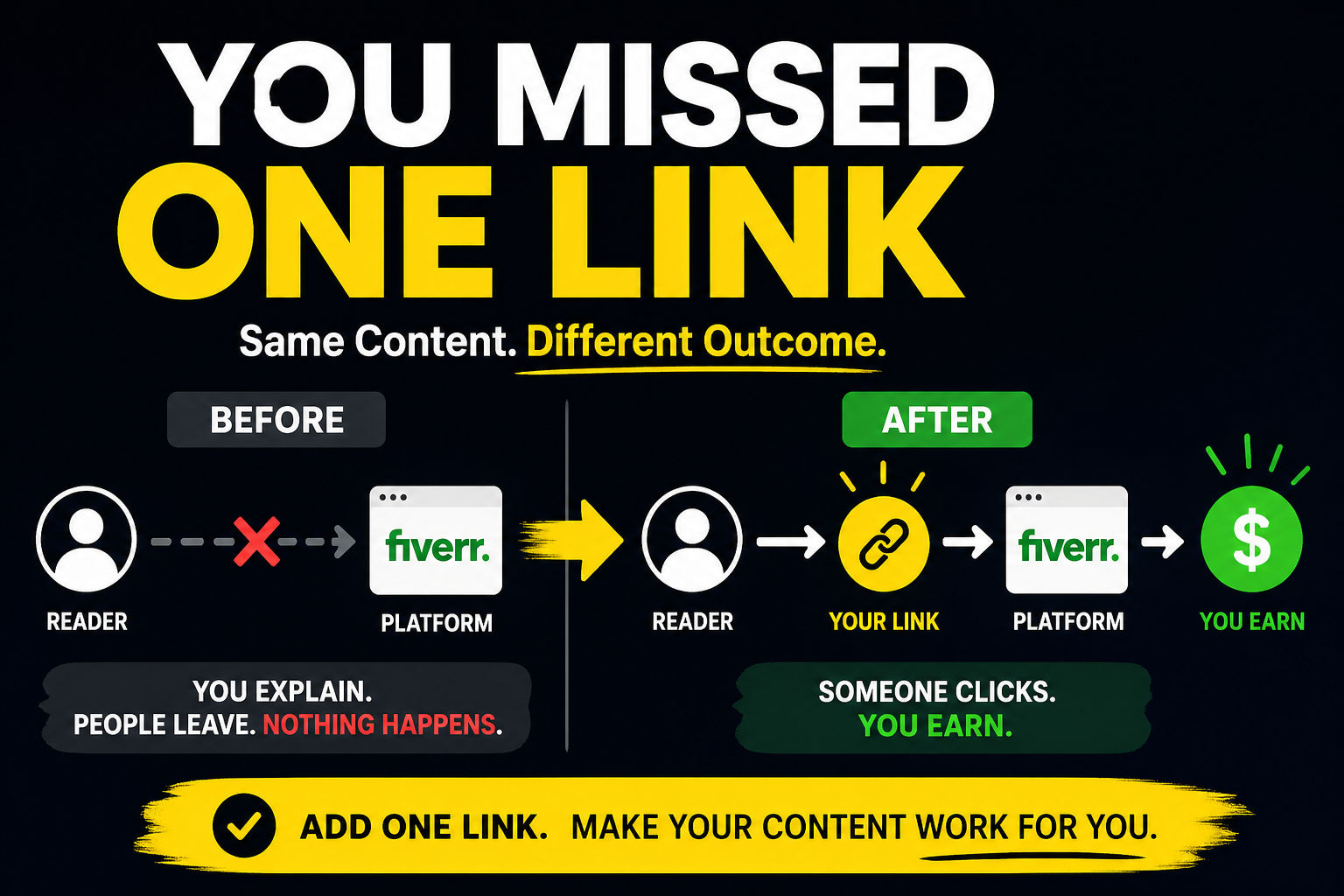
    I explain → people leave → nothing happens

    After:

    I explain → someone clicks → I earn something

    Same content.

    Different outcome.


    The biggest mistake beginners make

    They try to force it.

    Too many links
    Too many mentions
    Too obvious

    It starts to feel like an ad.

    People don’t trust it.


    What actually works

    Keep it simple.

    One post, one link.

    Fiverr post → Fiverr link
    PDF post → Gumroad link

    Match the content.


    You’re not creating something new

    This is important.

    You’re not writing new content.

    You’re using what you already have
    and connecting it.

    That’s why this step is easy.


    How it changes your structure

    Before:

    Fiverr → direct income
    Content → traffic
    PDF → product

    Now:

    Affiliate → extra income on top


    One more thing (important)

    If you’re targeting a US audience, add a simple disclosure.

    You can write:

    This post may contain affiliate links. I may earn a small commission at no extra cost to you.

    That’s enough.


    Final thought

    This step is not about adding more work.

    It’s about making your existing work pay.

    You don’t need more ideas.

    You just need to connect what you already built.

  • How to Turn One PDF Into Multiple Digital Products (Beginner Strategy)

    How to Turn One PDF Into Multiple Digital Products (Beginner Strategy)

    When I first made a PDF, I thought it was the final product.

    I wrote it, organized it, uploaded it,
    and waited to see if anyone would buy it.

    At the beginning, that felt enough.

    But after a while, something became clear.

    One PDF by itself is weak.

    It might sell.
    It might not.

    And even if it does, it doesn’t build much on its own.

    That’s when I realized something important.

    A PDF shouldn’t be a single product.
    It should be the starting point.


    A PDF is not the end

    Let’s say your PDF is about something simple like:

    “How to Make Your First Money Online”

    Inside, you probably have sections like:

    • how to start on Fiverr
    • how to get your first order
    • how to reuse content
    • how to create a simple product
    • common beginner mistakes

    At first, it looks like one product.

    But it’s not.

    It’s actually a collection of smaller products.


    People don’t want long explanations

    At the beginning, it feels like more content is better.

    Longer PDFs.
    More detail.
    More explanation.

    But that’s not what most beginners are looking for.

    They don’t want to read everything.

    They want something they can use right away.

    For example, someone starting on Fiverr doesn’t always need a 30-page guide.

    They might just want:

    • example gig titles
    • short profile descriptions
    • simple message templates
    • a checklist for their first order

    That’s why templates sell.


    How to turn a PDF into templates

    The process is simple.

    Go back to your PDF and ask one question:

    “What part of this can someone copy and use immediately?”

    For example, if your PDF says:

    “It’s better to start with a simple $5 service instead of trying to sell something expensive right away.”

    That’s explanation.

    Now turn it into something usable.

    Gig title examples:

    I will rewrite your short text naturally
    I will edit your short article for clarity
    I will summarize your content into simple English
    I will do basic online research for your topic

    Now it becomes a product.


    What you can actually create

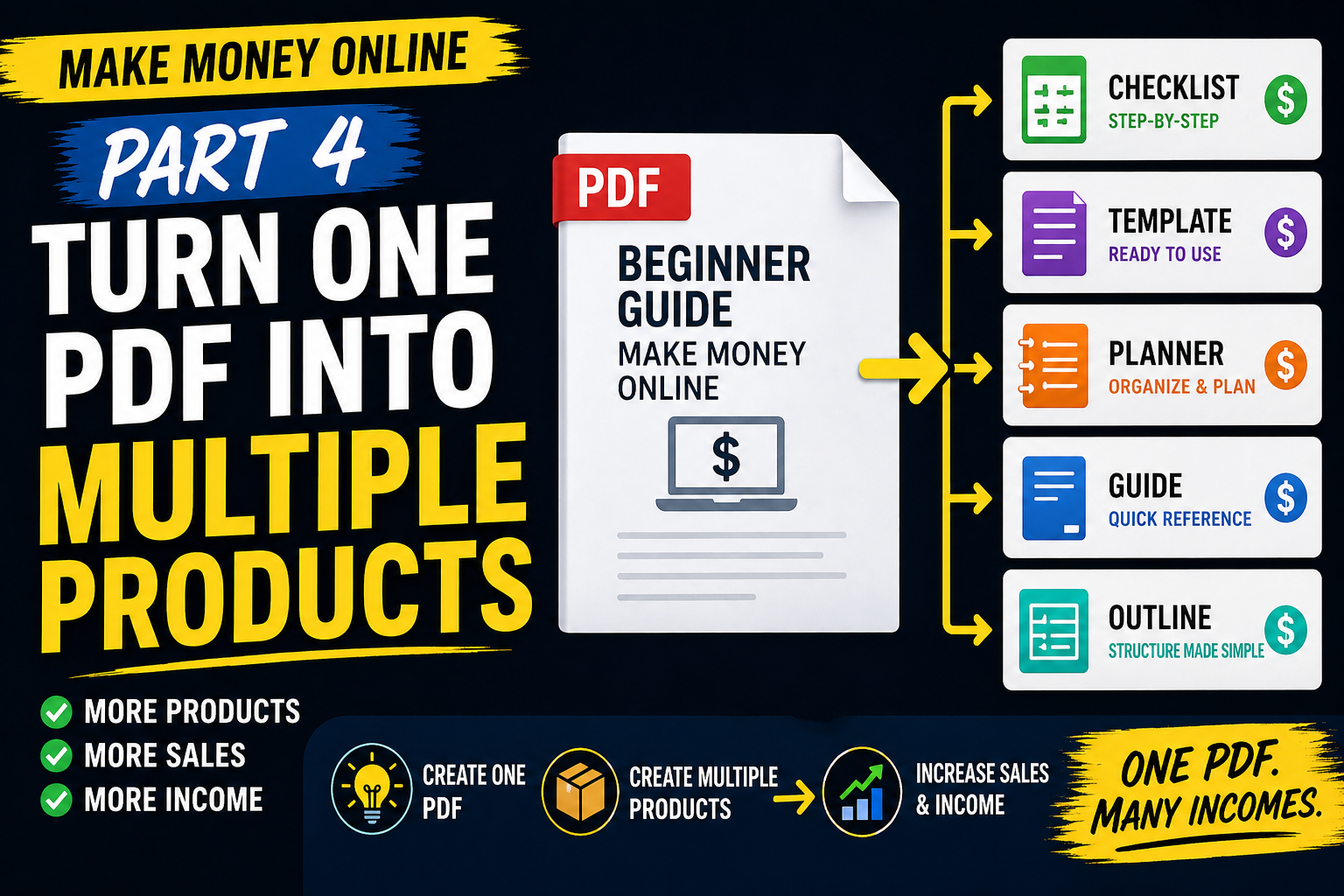
    From one PDF, you can easily create multiple small products.

    For example:

    Fiverr Gig Title Templates
    Fiverr Buyer Message Templates
    First Online Income Checklist
    Blog Post Repurposing Planner
    Simple PDF Product Outline

    You’re not creating new ideas.

    You’re reshaping what you already made.


    The actual process

    Here’s how I would do it step by step.

    Open your PDF.

    Look at the table of contents.

    Let’s say it looks like this:

    1. Starting on Fiverr
    2. Getting your first order
    3. Reusing content
    4. Creating a PDF
    5. Writing a product page

    Now turn each section into a product idea:

    Starting on Fiverr → Gig Title Template
    Getting your first order → Buyer Message Template
    Reusing content → Repurposing Planner
    Creating a PDF → PDF Outline Template
    Writing a product page → Description Template

    One PDF becomes five products.


    Tools you can use

    You don’t need anything complicated.

    For beginners, these are enough:

    Canva
    Google Docs

    If you want something simple and fast, use Google Docs.

    Write the content, format it cleanly, export as PDF.

    That’s it.

    Don’t spend too much time on design at the beginning.

    Your goal is not perfection.

    Your goal is to see if it sells.


    Pricing strategy

    Start low.

    $3 to $7 is realistic for simple templates.

    Examples:

    Fiverr Gig Title Templates — $3
    First Online Income Checklist — $5
    PDF Product Outline Template — $7

    The goal is not to maximize profit.

    The goal is to confirm that people are willing to pay.


    Where to sell

    If you’re starting from zero, keep it simple.

    Start with Gumroad.

    It’s easy to upload files.
    Easy to set up payments.
    Good for testing.

    Etsy can work later, but it requires more effort.

    So a simple path looks like this:

    Start → Gumroad
    Expand → Etsy
    Connect → Your blog


    How to write your product page

    Keep it simple.

    You don’t need a long sales page.

    Just include:

    • who it’s for
    • what problem it solves
    • what’s included
    • how to use it

    For example:

    This template is for beginners who want to start on Fiverr but don’t know what to write.

    Inside, you’ll get simple gig title examples and short message templates you can use right away.

    You don’t need experience.
    You just need a clear starting point.

    That’s enough.


    Don’t try to make one perfect product

    This is where most beginners get stuck.

    They try to make one big, perfect product.

    That takes too long.

    And often, it never gets released.

    A better approach is to create small products first.

    Test what people actually buy.

    Then improve from there.


    The difference between a PDF and a template

    A PDF explains.

    A template lets people act.

    A PDF tells you what to do.
    A template shows you exactly how to do it.

    That’s why templates are easier to sell.

    People don’t want to think.

    They want something they can use immediately.


    What I would create first

    If I had to start again, I would create these first:

    Fiverr Gig Title Template
    First Online Income Checklist
    Blog Post Repurposing Planner
    Simple PDF Outline
    Gumroad Product Description Template

    Each one connects to your content.

    That’s important.


    How to connect it to your blog

    Inside your blog posts, you can mention your templates naturally.

    For example, in a Fiverr post:

    “If you don’t know what kind of gig to create, I made a simple Fiverr gig title template for beginners.”

    Then link your product.

    In a content post:

    “If you want to turn one blog post into multiple pieces, a simple repurposing planner can make it easier.”

    Then link your product.

    In a PDF post:

    “If you don’t know how to structure your first PDF, start with a simple outline instead of a blank page.”

    Then link your product.

    No pressure. No aggressive selling.

    Just make it part of the flow.


    Final thought

    A PDF is not the final step.

    It’s the starting point.

    Inside that one file, there are multiple smaller products waiting to be created.

    You don’t need more ideas.

    You need to break down what you already made
    and turn it into something people can actually use.

    That’s how beginners expand income.
  • How Beginners Make Money Online (Part 3) — When Content Starts Paying You (PDF)

    How Beginners Make Money Online (Part 3) — When Content Starts Paying You (PDF)

    After making money on Fiverr, a thought starts to grow.

    Do I really have to keep doing this forever?

    You finish one task,
    and you’re back to zero.

    You work, you get paid.
    You stop, it stops.

    After a while, it feels limiting.


    I hit that wall too

    At first, it felt fine.

    $5
    $10
    a little more each time

    But then it became obvious.

    It’s just repetition.

    Money comes in,
    but nothing builds.


    That’s when something clicked

    I realized I was throwing everything away.

    Every task I finished
    was gone.

    Every piece of content I wrote
    was just… used once.


    So I tried something different

    I took what I already had
    and put it together.

    Simple things.

    • rewriting short text
    • fixing sentences
    • organizing ideas

    Nothing special.


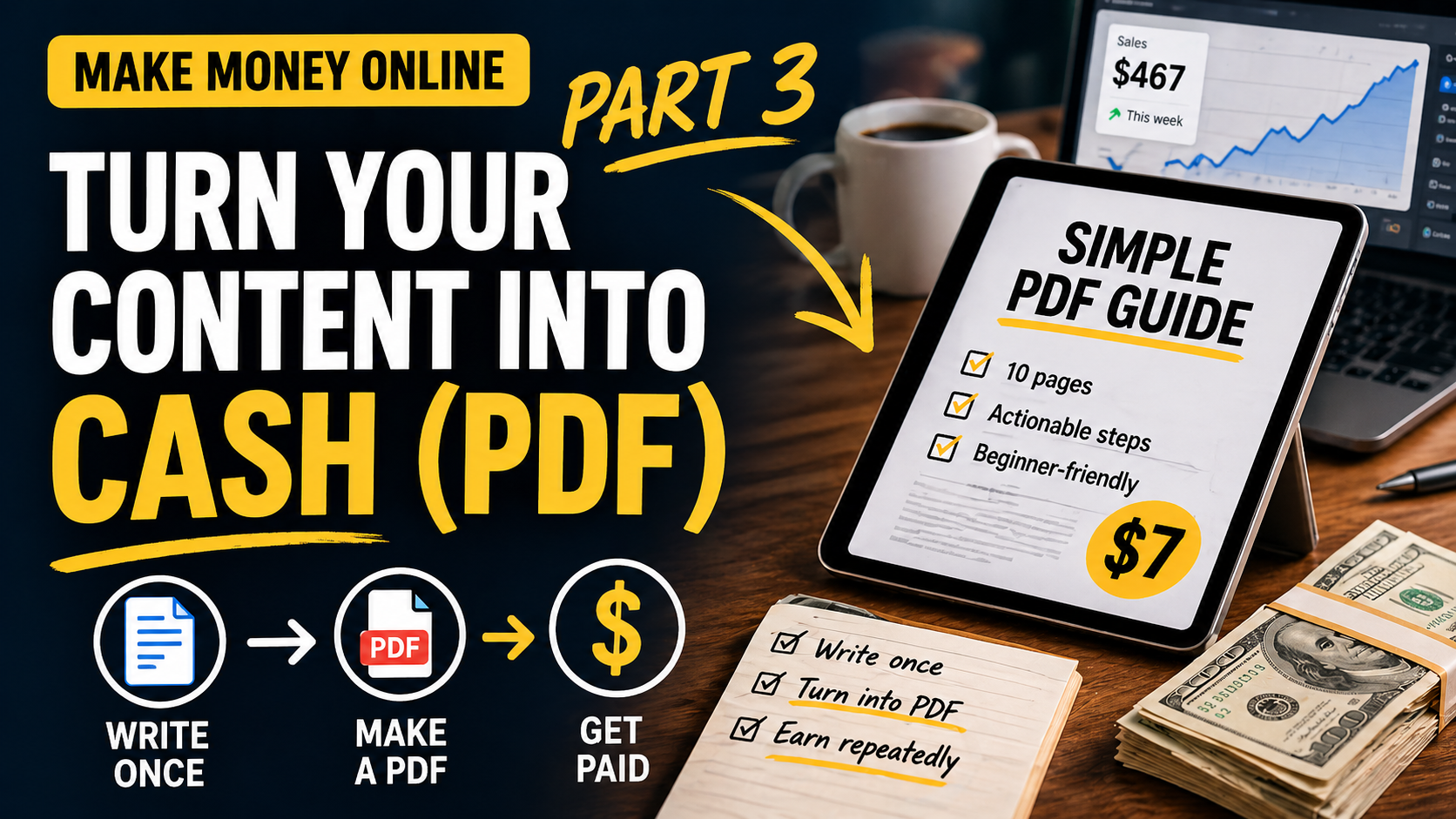
    I turned it into a PDF

    Not a long one.

    Maybe 8 to 10 pages.

    But I removed everything unnecessary.

    No extra explanation.
    No filler.

    Just what someone could actually use right away.


    I didn’t expect anything

    I uploaded it to Gumroad.

    Set the price low.

    $7.

    Honestly, I didn’t think it would sell.


    Then one sale came in

    Just one.

    $7.

    Small amount.

    But it felt completely different.


    Because this time…

    I didn’t do anything.

    No new task.
    No extra work.

    And money came in.


    That’s when I understood

    This is a different system.


    Where most people get it wrong

    They think they need something big.

    Expert-level knowledge.
    A perfect product.

    So they never release anything.


    But people don’t buy perfection

    They buy clarity.

    They pay for something
    that saves them time.


    So I changed how I used content

    On the blog, I explain things.

    In the PDF, I make it actionable.

    For example:

    • Blog: this is how it works
    • PDF: do this, step by step

    That’s the difference.


    Platform is simple

    If you’re starting, keep it simple.

    Just use:

    Gumroad

    That’s enough.


    Pricing is simple too

    Start low.

    $5 to $10

    You’re not trying to maximize profit.

    You’re trying to see if it sells.


    This is where everything connects

    Now the structure looks like this:

    Fiverr → immediate income
    Content → brings attention
    PDF → ongoing income

    That’s the system.


    Why most people never get here

    They wait too long.

    They try to make it perfect.

    So they never launch.


    I did the opposite

    I made something simple.
    Put it out.
    Then improved it later.


    Final thought

    The amount doesn’t matter.

    $5
    $7

    That’s not the point.


    What actually matters

    Money came in
    from something I already made.

    That changes how you think.


    After that, everything is different

    It’s not about “can this work?”

    It’s about
    “how many times can I repeat this?”

  • How Beginners Make Money Online (Part 2) — Turn One Post Into Ongoing Income

    How Beginners Make Money Online (Part 2) — Turn One Post Into Ongoing Income

    After making your first money on Fiverr, you notice something quickly.

    It works.
    But it depends on your time.

    You work, you get paid.
    You stop, it stops.

    That’s where most people get stuck.


    I got stuck there too

    At the beginning, I kept creating new things.

    One blog post, done.
    Next day, another post.
    Then another one.

    After a few days, it became obvious.

    This doesn’t last.

    You run out of ideas.
    You start forcing content.
    It gets tiring.


    So I changed one thing

    I stopped focusing on creating more.

    I started using what I already made.


    What I actually did

    Let’s say I did a simple Fiverr task.

    Rewriting a short piece of text.
    Fixing awkward sentences.
    Cleaning up the structure.

    Before, I would just finish and move on.

    This time, I didn’t.


    Here’s how I turned it into more content

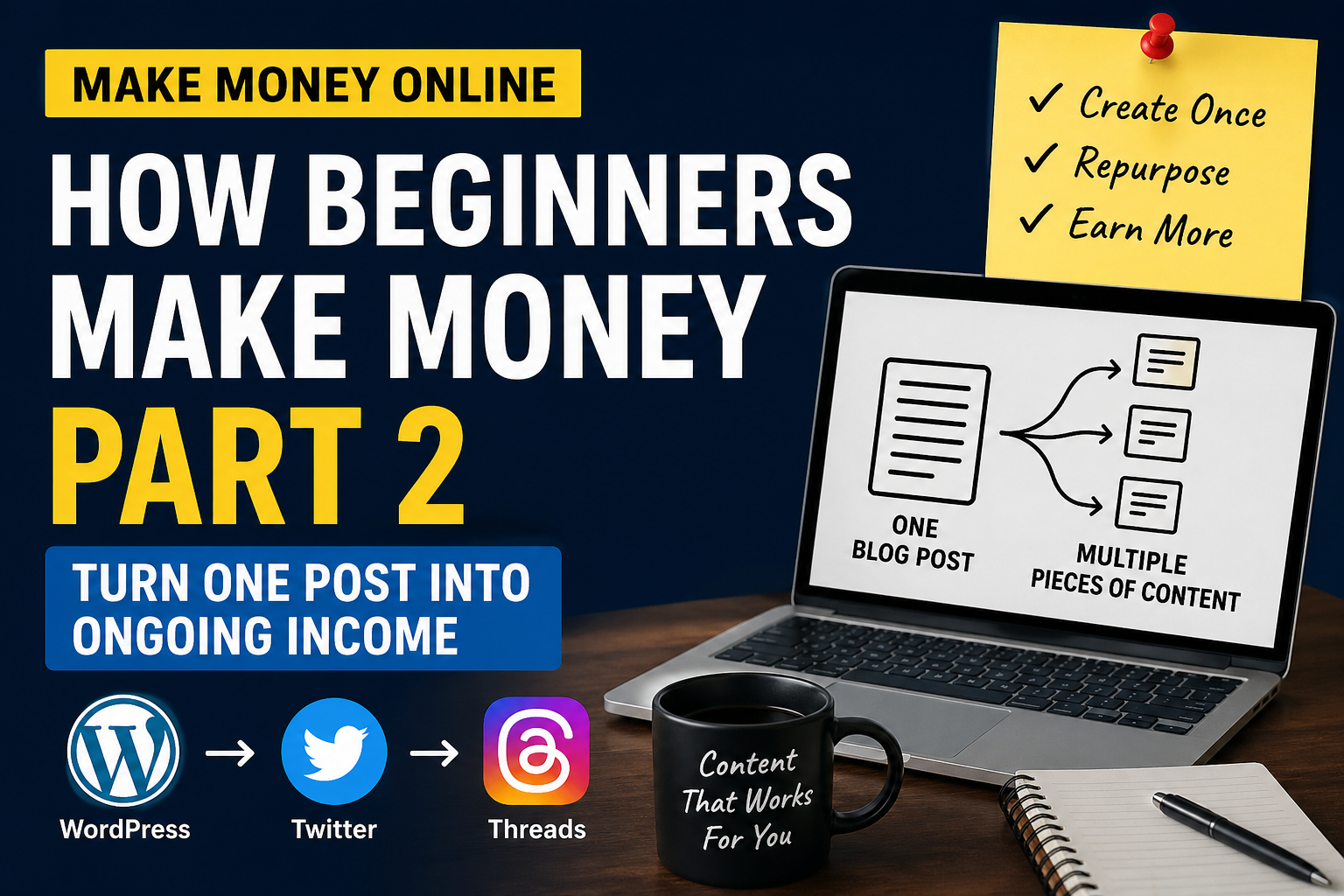
    Step 1: Turn it into a blog post (WordPress)

    I took that simple task and wrote a short post about it.

    For example:

    “How to make your writing sound more natural”

    That became one blog post.


    Step 2: Break it into short posts (Twitter / Threads)

    Then I took key lines from that post.

    Simple statements like:

    “Most writing sounds unnatural because the flow is off, not the words.”

    Each line became a separate short post.


    Step 3: Repeat in different formats

    One blog post turned into multiple pieces.

    • short posts
    • lists
    • simple summaries

    Same idea. Different format.


    It felt strange at first

    It felt like I was repeating myself.

    But the result was different.

    More people saw it.


    Why this works

    People don’t see everything the first time.

    They scroll past it.
    They miss it.
    They forget it.

    If you only post once, most people never see it.


    Important point

    This is not copy and paste.

    That doesn’t work.

    You need to reshape it.

    • long → short
    • explanation → list
    • experience → summary

    Same content, different feel.


    Platforms you actually need (beginner setup)

    You don’t need many.

    Start with just these:

    • WordPress (blog)
    • Twitter or Threads (short content)

    That’s enough.


    What changed after this

    Before:

    I needed a new idea every day.

    Now:

    One idea lasts for days.

    That made everything easier.


    The income side also changes

    Fiverr is time-based.

    You work, you get paid.

    This is different.

    You create once,
    and use it multiple times.

    It builds over time.


    Why most people fail here

    They keep trying to create new content.

    That’s why they burn out.


    What I do now

    I write one piece
    → publish it on my blog
    → break it into smaller posts
    → post them over time

    Then repeat.


    Final thought

    The problem isn’t lack of ideas.

    It’s not using what you already have.

  • I Made My First $5 on Fiverr — Then I Repeated It (Beginner Guide)

    I Made My First $5 on Fiverr — Then I Repeated It (Beginner Guide)

    I didn’t trust Fiverr at first.

    There were too many people talking about making money online,
    and most of it sounded exaggerated.

    So I didn’t overthink it.
    I just posted one simple offer.


    What I listed first

    Nothing complicated.

    “I will rewrite your short text”

    Price: $5

    Looking back, it was cheap.
    But at the time, that wasn’t the point.

    The goal was simple.

    Get one order.


    The first few days

    Nothing happened.

    A few views, no orders.

    I remember thinking
    this probably doesn’t work.

    But I didn’t delete it.
    I just left it there.


    The first order

    A few days later, I got a notification.

    $5 order.

    Small amount, but it felt different.

    That was the moment I realized
    this was actually real.


    What I actually did

    The task was simple.

    A short piece of text.

    I rewrote a few sentences,
    fixed some awkward phrasing,
    and cleaned up the flow.

    It took about 15 minutes.


    This is where it changed

    Most people stop here.

    I didn’t.

    I looked at it differently.

    If 15 minutes equals $5,
    then repeating it makes sense.

    So I kept doing the same thing.


    What Fiverr really is

    It’s not about being highly skilled.

    It’s about doing small tasks
    that other people don’t want to spend time on.


    Here’s how to actually start (step by step)

    This is exactly what I did, without overcomplicating it.


    Step 1: Create your account

    Sign up is simple.

    Don’t try to make it perfect.

    • Basic profile photo
    • Short description
    • No exaggeration

    That’s enough.


    Step 2: Create your first gig

    This is where most beginners get stuck.

    So keep it simple.

    Pick something you can finish in under 10 minutes.

    Examples:

    • rewriting short text
    • basic research
    • simple formatting

    Use that directly as your title.

    “I will rewrite your short text naturally”


    Step 3: Set your price

    At the beginning, don’t focus on profit.

    Focus on getting your first order.

    $5 is enough.


    Step 4: Keep your description simple

    You don’t need a long explanation.

    Just include:

    • what you will do
    • how long it takes
    • what the result will be

    That’s it.


    Step 5: The waiting phase

    This is where most people quit.

    • views but no orders
    • days pass with no change

    This is normal.

    Don’t delete your gig.

    Leave it.


    Step 6: After your first order

    This is where things start.

    • deliver quickly
    • keep it clean and clear
    • get a review

    Then repeat.


    What it looked like for me

    Posted one gig
    → no response for a few days
    → first $5 order
    → repeated the same task
    → got faster
    → reviews started to build
    → slowly increased price

    That was the whole process.


    Why most people fail

    Not because it’s hard.

    Because they start the wrong way.

    • they overprepare
    • they try to start big
    • they wait too long

    And never actually begin.


    Final thought

    I don’t have special skills.

    But I’ve done it once.

    And that changes how you see everything.

    Making money online isn’t complicated.

    Starting is.

  • I Made My First $100 Online — With No Skills or Experience

    I Made My First $100 Online — With No Skills or Experience

    I didn’t expect it to work.

    Most of the “make money online” stuff felt exaggerated or fake.
    But at some point I got tired of reading and decided to just try something.

    Nothing complicated. Just something I could do right away.


    I started with nothing

    No real skills.
    No experience.
    No money to invest.

    So I didn’t build a website or start a YouTube channel.
    I didn’t try to learn everything first.

    I just picked a small task and did it.


    The first payment was $5

    That was it.

    Not impressive.
    But it changed how I saw everything.

    Because it answered the only question that mattered.

    Is it actually possible?

    Yes.


    After that, I didn’t change much

    I didn’t jump to a new idea.
    I didn’t try to scale anything.

    I just kept doing the same type of work.

    Slowly, it added up.

    5 became 20.
    20 became 50.
    Eventually it reached 100.


    The mistake most people make

    They aim too high at the beginning.

    They want something passive.
    Or something that makes real money fast.

    That usually leads to nothing.

    What worked for me was the opposite.

    Start small.
    Prove it works.
    Then repeat.


    What actually worked

    Nothing special.

    Simple tasks people were already paying for.

    Writing short pieces.
    Looking up information.
    Editing basic content.

    There are platforms for this. Fiverr, Upwork. That’s enough.

    No need to overcomplicate it.


    Why most people never get there

    They stay in preparation mode.

    Watching videos.
    Reading guides.
    Planning things they haven’t started.

    Or they wait until they feel ready.

    That moment doesn’t really come.


    What matters more than anything

    Making the first dollar.

    That’s when it stops being theory.

    After that, you’re not guessing anymore.
    You’ve done it once, so you know it can be done again.


    Final thought

    I’m not making huge money.

    But I don’t see online income the same way anymore.

    It’s not something special.
    It’s just something most people never actually try.