Tag: money management

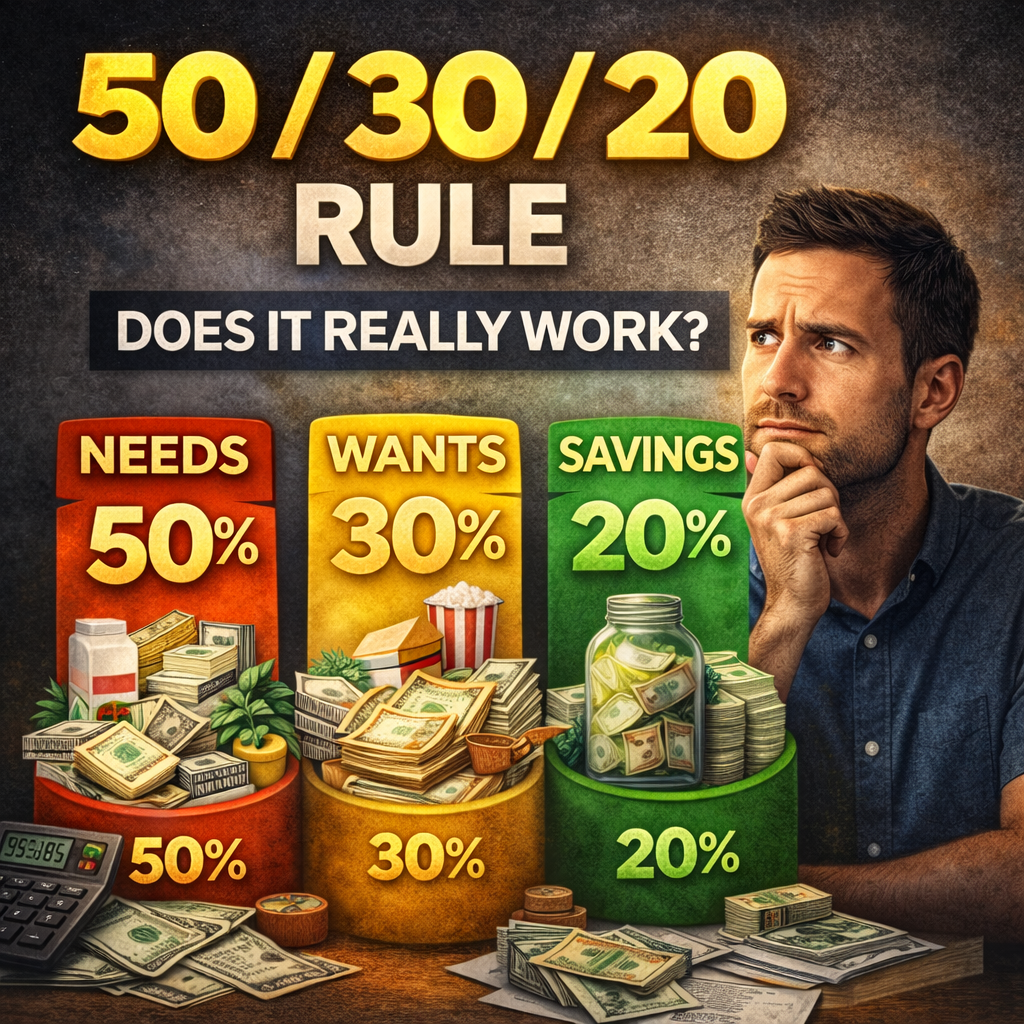
  • The 50/30/20 Rule Explained (And Why It Doesn’t Work for Everyone)

    The 50/30/20 Rule Explained (And Why It Doesn’t Work for Everyone)

    The 50/30/20 rule is one of the most popular budgeting methods.

    It sounds simple.

    It sounds smart.

    But here’s the truth:

    It doesn’t work for everyone.


    What is the 50/30/20 rule?

    It divides your income into three parts:

    • 50% → Needs (rent, bills, groceries)
    • 30% → Wants (entertainment, eating out)
    • 20% → Savings

    That’s it.

    No apps. No complicated tracking.

    Just a simple structure.


    Why people like it

    Because it feels balanced.

    You’re not cutting everything.

    You’re not forcing extreme saving.

    You’re just organizing your money.


    The problem nobody talks about

    This rule assumes one thing:

    👉 Your expenses fit into neat percentages.

    But in real life, they don’t.


    Example (real situation)

    Let’s say you make $2,000/month.

    According to the rule:

    • Needs → $1,000
    • Wants → $600
    • Savings → $400

    Sounds good.

    But what if:

    • Your rent alone is $1,200?

    The system breaks instantly.

    How Much Should You Save Each Month?


    Why it fails for many people

    1. Fixed costs are too high

    Rent, debt, bills.

    These don’t adjust easily.


    2. Income is inconsistent

    Freelancers, business owners, part-time workers.

    Monthly percentages don’t stay stable.


    3. It ignores behavior

    Budgeting isn’t math.

    It’s habit.

    You can follow percentages perfectly
    and still overspend.


    ⚠️ Quick Check (Don’t Skip)

    Think about your last month:

    Did your spending follow any structure?

    Or did it just happen?

    If it “just happened,”
    no rule will fix that.


    So should you ignore the 50/30/20 rule?

    No.

    But don’t follow it blindly.


    A better way to use it

    Instead of strict percentages:

    👉 Use it as a reference, not a rule.

    For example:

    • Needs → as low as possible
    • Savings → as high as sustainable
    • Wants → flexible


    What actually works better

    A simpler system:

    1. Pay yourself first (automatic saving)
    2. Cover essential expenses
    3. Spend what’s left

    No rigid numbers.

    Just a working structure.


    What changed for me

    I tried to follow a perfect system before.

    It didn’t last.

    Because my expenses didn’t fit the rule.

    But when I switched to automatic saving first,
    everything became easier.

    The structure mattered more than the percentages.


    Why this matters

    People fail not because budgeting is hard.

    They fail because they follow systems
    that don’t match their reality.


    What’s next

    If fixed percentages don’t work for you,

    👉 the next step is building a budget that actually fits your life.

    I’ll show you how in the next post.


    Conclusion

    The 50/30/20 rule is a good starting point.

    But it’s not the answer.

    Use it as a guide.

    Not as a rule you must follow.

  • How to Grow Your Money After $1,000 (Beginner Strategy That Actually Works)

    How to Grow Your Money After $1,000 (Beginner Strategy That Actually Works)

    Saving your first $1,000 is a big step.

    But what happens next is what actually determines your financial future.

    Because this is where most people get stuck.

    They either stop saving…
    or jump into investing without a plan.

    And both usually lead to the same place — no real progress.


    The mistake most people make

    After hitting $1,000, people start thinking:

    “I should invest now.”
    “Saving isn’t enough.”
    “I need to grow this fast.”

    So they rush.

    They buy random stocks.
    They try crypto.
    They follow whatever looks exciting.

    But without structure, money doesn’t grow.

    It just moves… and often disappears.


    What actually works

    If you want your money to grow, you need a simple structure.

    Not something complicated.
    Just something consistent.

    Think of it like this:

    You don’t grow money by rushing.

    You grow it by building a system.

    If you haven’t saved your first $1,000 yet, start here:

    https://simplecostlife.com/how-to-build-first-1000-savings-fastirst $1,000 yet, start here:


    A simple beginner structure

    Start by dividing your money.

    Not all of it should go into one place.

    A simple approach:

    • A portion stays safe (emergency or buffer)
    • A portion stays liquid (ready to use or move)
    • A portion goes into investing

    The exact percentages don’t matter as much as the idea:

    Don’t go all-in on one decision.

    This alone prevents most beginners from making big mistakes.


    Start small with investing

    You don’t need to “win big” early.

    In fact, trying to win big is how people lose.

    Start small.

    Learn how things move.
    Understand what you’re putting money into.

    Growing money is a long game.

    Not a quick one.


    What changed for me

    I used to spend about $10 every month on an online game.

    At the time, it felt like nothing.
    Just ten dollars.

    But after I saved my first $1,000, I started looking at my habits more closely.

    That small, automatic expense had been running every month without me even noticing.

    So I made a simple change.

    I stopped that payment…
    and turned it into an automatic transfer to my savings instead.

    Same amount.
    Different direction.

    That one switch changed how I handled money.

    I’ll break down exactly how automatic saving works — and how to set it up — in the next post.


    One thing to think about

    Before you move on, ask yourself this:

    Is your money growing…
    or just sitting there?

    And more importantly —

    Is anything happening automatically,
    or are you relying on willpower every time?

    That answer matters more than you think.


    Conclusion

    Your first $1,000 proves you can save.

    But growing money is a different skill.

    It’s not about speed.
    It’s not about luck.

    It’s about structure.

    Start simple.
    Stay consistent.

    And focus less on big moves —
    and more on small systems that actually work.

  • What to Do After Your First $1,000 (Don’t Make This Mistake)

    What to Do After Your First $1,000 (Don’t Make This Mistake)

    Saving your first $1,000 feels like a big win.

    And it is.

    But this is also where a lot of people mess up.

    They think they’re finally “okay”…
    and then slowly end up right back where they started.


    The moment people get it wrong

    Once you hit that first $1,000, your mindset changes.

    You start thinking:

    “I deserve to spend a little.”
    “Maybe I should try investing.”
    “I’m doing fine now.”

    That’s usually where things go sideways.

    Because $1,000 isn’t the finish line.
    It’s just proof that you can do it.

    If you’re still struggling to save, read this:

    If saving money feels hard, it’s not your fault — it’s your system.

    Start here: How to Stop Impulse Spending (Even If You Have No Discipline)


    The common mistakes

    First, spending it back.

    You worked for it, so you reward yourself.
    A few small purchases, maybe one bigger one.
    Before you realize it, it’s gone.

    Second, jumping into investing without a plan.

    Stocks, crypto, whatever looks interesting.
    No understanding, just trying things.
    That money often disappears just as fast.

    Third, no next step.

    You saved money… but for what?
    If there’s no plan, progress just stops.


    What changed for me

    I used to spend about $10 a month on an online game.

    At the time, it felt like nothing.
    Just ten dollars.

    But after I finally saved my first $1,000, I started looking at everything differently.

    That “small” expense had been happening every single month.

    Not once. Not twice.
    Consistently.

    And the real problem wasn’t the amount.

    It was that I wasn’t even thinking about it.

    That’s when it clicked.

    It’s not always about how much you make.
    It’s about what you keep ignoring.

    Once I noticed it, I started catching other small leaks too.

    That’s when things actually started to change.


    What to do instead

    If you’ve hit $1,000, don’t stop there.

    Stretch it into something more useful.

    Start by building a real buffer.
    A few months of living expenses if possible.

    Then look at your spending patterns.
    Not in a strict, stressful way — just awareness.

    After that, take your time with investing.
    Learning matters more than jumping in early.

    And at some point, focus on increasing income.
    There’s a limit to how much you can cut.
    There isn’t really a limit to how much you can earn.


    One thing to think about

    Before you leave this page, do this:

    Think of one small expense you barely notice.
    Something you pay without thinking.

    Now multiply it by 12.

    That number is usually where the problem starts.


    Conclusion

    Your first $1,000 proves you can save.

    But what you do after that determines everything.

    Most people don’t fail because they earn too little.

    They fail because small habits keep working against them, quietly.

    Fix that, and everything else becomes easier.

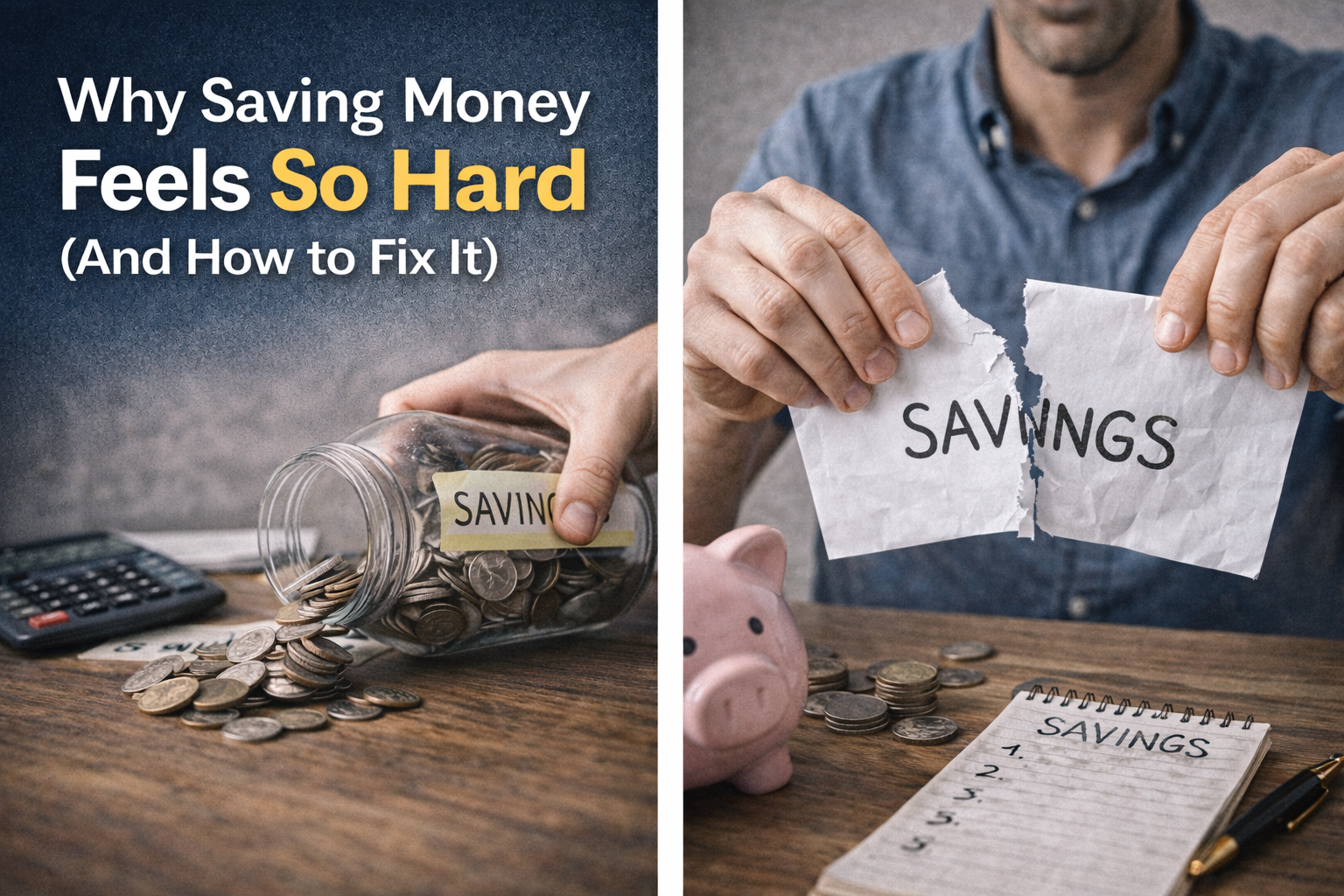
  • Why Saving Money Feels So Hard in 2026 (And How to Finally Fix It)

    Why Saving Money Feels So Hard in 2026 (And How to Finally Fix It)

    Introduction

    Saving money sounds simple.

    Spend less than you earn.

    But in reality, most people struggle with it every single month.

    It’s not because they’re lazy.

    It’s because the system around them is working against them.

    If saving money feels hard, there are real reasons behind it.

    And once you understand them, you can fix them.


    1. Your Brain Is Wired to Spend

    Humans are not designed to save.

    We are designed to survive — and enjoy immediate rewards.

    That’s why:

    • You feel good when you buy something
    • You feel nothing when you save

    Saving feels like a loss.

    Spending feels like a reward.


    2. You Don’t See Immediate Results

    Spending gives instant feedback.

    Saving does not.

    You don’t “feel” your savings growing daily.

    So your brain loses motivation quickly.


    3. Your Expenses Are Already Too High

    Most people try to save after spending.

    That’s the problem.

    If your fixed costs are high:

    • Rent
    • Subscriptions
    • Car payments

    There’s nothing left to save.


    4. You Rely on Willpower

    Willpower always fails.

    If your system depends on “trying harder,”
    you will eventually quit.

    Saving needs to be automatic — not emotional.


    5. You Don’t Have a Clear Goal

    “Saving money” is too vague.

    Your brain needs a target:

    • Emergency fund
    • Travel
    • Freedom

    Without a goal, saving feels pointless.


    6. You Keep Resetting Every Month

    You save for a few weeks.

    Then something happens.

    And you’re back to zero.

    This cycle destroys confidence.


    7. You’re Surrounded by Spending Triggers

    2026 environment is built for spending:

    • Ads everywhere
    • Easy payments
    • One-click purchases

    You’re constantly tempted.


    1. Pay Yourself First

    Save before you spend.

    Not after.


    2. Automate Everything

    Remove decisions.

    Set automatic transfers.


    3. Lower Fixed Costs

    Big wins come from:

    • Rent
    • Bills
    • Lifestyle


    4. Make Saving Visible

    Track progress weekly.

    Make it feel real.


    5. Start Small but Stay Consistent

    Even $5 a day works.

    Consistency beats intensity.


    Conclusion

    Saving money feels hard because it’s not just about money.

    It’s about behavior, environment, and systems.

    Fix those — and saving becomes easy.

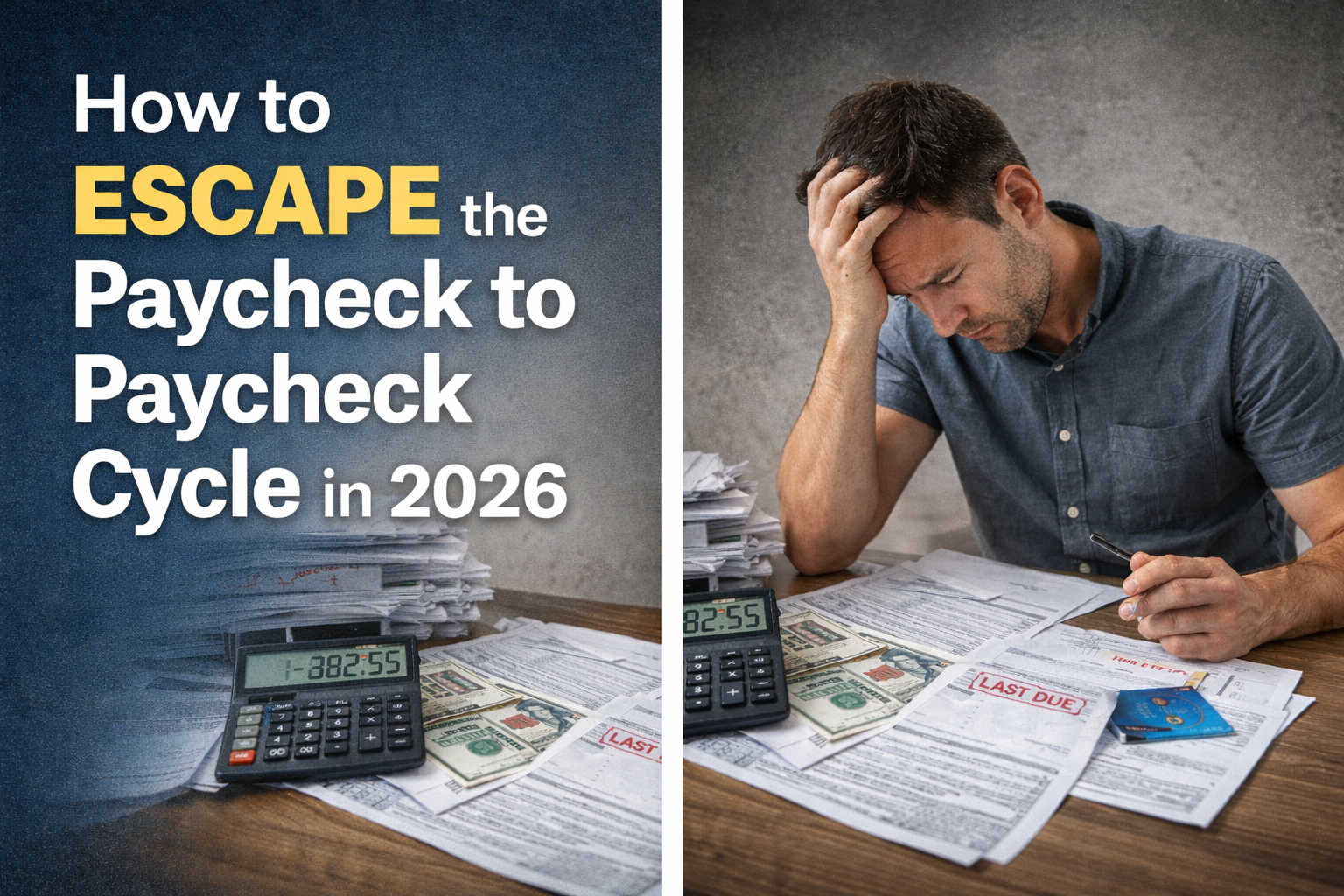
  • How to Escape the Paycheck to Paycheck Cycle in 2026 (Step-by-Step Plan That Actually Works)

    How to Escape the Paycheck to Paycheck Cycle in 2026 (Step-by-Step Plan That Actually Works)

    Introduction

    Most people know they are stuck living paycheck to paycheck.

    But knowing the problem isn’t enough.

    If you’ve tried saving money and still feel like nothing is changing, the issue isn’t your effort — it’s your system.

    In 2026, escaping financial stress requires a clear, structured plan.

    This guide will show you exactly how to break the paycheck to paycheck cycle step by step.

    If you’re stuck living paycheck to paycheck, the biggest problem isn’t income — it’s spending behavior.

    👉 Start here: How to Stop Impulse Spending (Even If You Have No Discipline)


    1. Understand Your Real Financial Situation

    Before you can fix anything, you need full clarity.

    Most people avoid checking their finances because it feels uncomfortable.

    But avoiding the truth is what keeps you stuck.

    Start with three simple numbers:

    • Total monthly income
    • Fixed expenses (rent, loans, subscriptions)
    • Variable expenses (food, shopping, lifestyle)

    Once you see the full picture, you can start making real decisions.


    2. Cut Fixed Expenses First

    If you want fast results, don’t start with small savings.

    Start with the biggest expenses.

    Fixed costs are what lock you into the paycheck cycle.

    Focus on:

    • Rent or housing costs
    • Car payments
    • Monthly subscriptions

    Reducing these creates immediate financial breathing room.


    3. Build a Survival Budget

    Forget perfect budgeting.

    What you need is a survival system.

    A survival budget focuses only on essentials:

    • Housing
    • Food
    • Transportation
    • Basic bills

    Everything else is temporarily removed.

    This isn’t forever — it’s a reset.


    4. Create an Emergency Buffer

    Your first goal is not investing.

    It’s stability.

    Without savings, you are always one problem away from financial stress.

    Start small:

    • First goal: $500
    • Next goal: $1,000

    This buffer breaks your dependency on the next paycheck.


    5. Automate Your Finances

    Manual saving doesn’t work long-term.

    Automation does.

    Set up:

    • Automatic transfers to savings
    • Separate accounts for spending and saving
    • Fixed saving percentages

    This removes emotional decisions from your money.


    6. Increase Your Income Strategically

    Cutting expenses has limits.

    Income growth changes everything.

    Look for:

    • Side income opportunities
    • Skill upgrades
    • Better-paying jobs

    Even a small increase in income can accelerate your progress.


    7. Stay Consistent for 3 to 6 Months

    This is where most people fail.

    They start strong — then stop.

    Consistency is what creates results.

    Stick to the plan for at least 3 to 6 months.

    That’s when real change happens.


    Conclusion

    Escaping the paycheck to paycheck cycle is not about luck.

    It’s about structure, discipline, and consistency.

    If you follow this plan, you won’t just survive — you’ll build real financial stability.

  • Why You’re Still Living Paycheck to Paycheck in 2026 (Even With a Decent Salary)

    Why You’re Still Living Paycheck to Paycheck in 2026 (Even With a Decent Salary)

    You’re not broke because you don’t earn enough.

    That’s what most people believe — but in 2026, that’s rarely the real problem.

    There are people making $3,000 a month who manage to save.
    And there are people making $10,000 a month who still feel like they’re drowning.

    So what’s really going on?

    If you feel like your money disappears every month, this article will show you exactly why — and what to fix immediately.


    1. Lifestyle Inflation Is Killing You

    The moment your income increases, your spending increases too.

    You upgrade your phone.
    You move to a nicer apartment.
    You eat out more often.

    Before you realize it, your expenses grow just as fast as your income.

    This is called lifestyle inflation — and it keeps you stuck in the same financial position no matter how much you earn.


    2. You Don’t Track Your Money

    Most people have no idea where their money actually goes.

    They “feel” like they didn’t spend much — but small daily expenses add up fast.

    • Coffee
    • Food delivery
    • Subscriptions

    These don’t feel big individually, but together they destroy your cash flow.

    If you’re not tracking your spending, you’re guessing — and guessing always leads to overspending.


    3. Fixed Expenses Are Too High

    This is the real killer.

    Your rent, car payment, insurance, and subscriptions are quietly eating most of your income.

    And unlike small expenses, these are hard to change once you’re locked in.

    If your fixed costs are too high, no amount of budgeting will save you.


    4. You Rely on Your Next Paycheck

    Living paycheck to paycheck isn’t just about income.

    It’s about dependency.

    If one missed paycheck would break your finances, you’re already in a risky position.

    This creates constant stress — and prevents you from building real financial security.


    5. You Don’t Have a Financial System

    Saving money isn’t about motivation.

    It’s about systems.

    If you’re trying to “save whatever is left,” you’ll always fail.

    Instead, money should be automatically divided:

    • Spend
    • Save
    • Invest

    Without a system, your money will always disappear.


    6. You Confuse Wants With Needs

    Many people justify unnecessary spending as “needs.”

    • “I need a better phone.”
    • “I need this subscription.”
    • “I deserve this.”

    The truth is, most of these are wants.

    And they slowly keep you stuck.


    7. You’re Not Building Margin

    Financial stability comes from margin.

    Margin = income minus expenses.

    If that gap is too small, you’ll always feel broke — no matter how much you earn.


    Conclusion

    If you’re still living paycheck to paycheck in 2026, it’s not just about income.

    It’s about habits, systems, and awareness.

    Fix these, and your financial life will change faster than you expect.


  • Why You’re Always Broke in 2026 (7 Money Habits That Are Draining Your Wallet)


    Money habits that waste money in 2026 and how to fix them

    Most people think the problem is low income. But in reality, it’s often small daily habits that quietly drain your money over time.

    If you feel like you’re always running out of money, you’re not alone.

    In 2026, the real challenge isn’t earning more — it’s stopping unnecessary money leaks.


    Why Small Habits Matter More Than You Think

    Many people ignore small expenses because they seem insignificant.

    But here’s the truth:

    Small spending, repeated daily, becomes a big financial problem.

    I learned this the hard way.


    1. Ignoring Small Subscriptions

    At one point, I had a Disney+ subscription.

    It was cheap, so I didn’t pay much attention to it. I barely used it, but I never canceled it.

    Three years later, I checked how much I had spent.

    It was a lot more than I expected.

    What felt like a small monthly payment turned into a surprisingly large amount over time.

    That’s the danger of ignoring “small” expenses.


    2. Buying Cheap Things Too Often

    Cheap items feel harmless.

    You see something for a few dollars and think, “It’s cheap, why not?”

    But this is where many people lose money.

    The cheaper the item, the easier it is to buy without thinking.

    And that’s exactly the problem.

    Buying many cheap things often costs more than buying fewer valuable things.


    3. Impulse Buying Without Thinking

    You see something, you like it, and you buy it immediately.

    No plan. No need. Just emotion.

    This habit slowly destroys your finances.

    A simple rule can help:

    Wait 24 hours before buying anything non-essential.

    Most of the time, you won’t even want it anymore.


    4. Eating Out Too Frequently

    Food is necessary.

    But eating out all the time is expensive.

    Ordering delivery or grabbing food outside may feel convenient, but it adds up fast.

    Cooking at home just a few more times per week can save a significant amount of money.


    5. Treating Coffee Like a Necessity

    Many people treat coffee as a daily essential.

    But it’s not.

    Buying coffee every day may seem small, but over time, it becomes a major expense.

    For example:

    Spending $5 a day on coffee equals about $150 per month.

    That’s money that could be saved or invested.


    6. Not Tracking Your Spending

    If you don’t know where your money is going, you can’t control it.

    Many people avoid checking their expenses because it feels uncomfortable.

    But ignoring it makes things worse.

    Even tracking your spending for just one week can completely change your awareness.


    7. Living Without a Budget

    Without a plan, money disappears.

    Budgeting doesn’t mean restriction.

    It means giving your money a direction.

    Even a simple weekly budget can help you stay in control and avoid unnecessary spending.


    A Personal Lesson About Money

    I once believed making money quickly was the key.

    I focused too much on growing money fast instead of managing it properly.

    That didn’t end well.

    What I learned is simple:

    It’s not just about making money — it’s about keeping it.

    And that starts with controlling your daily habits.


    How to Fix These Habits

    You don’t need to change everything at once.

    Start small:

    • Track your spending for a week
    • Cancel unused subscriptions
    • Apply the 24-hour rule
    • Set a simple weekly budget

    Small changes lead to big results.


    Final Thoughts

    Being broke is not always about income.

    It’s often about habits.

    If you can control small daily decisions, you can completely change your financial future.

    Start today.