Tag: personal finance

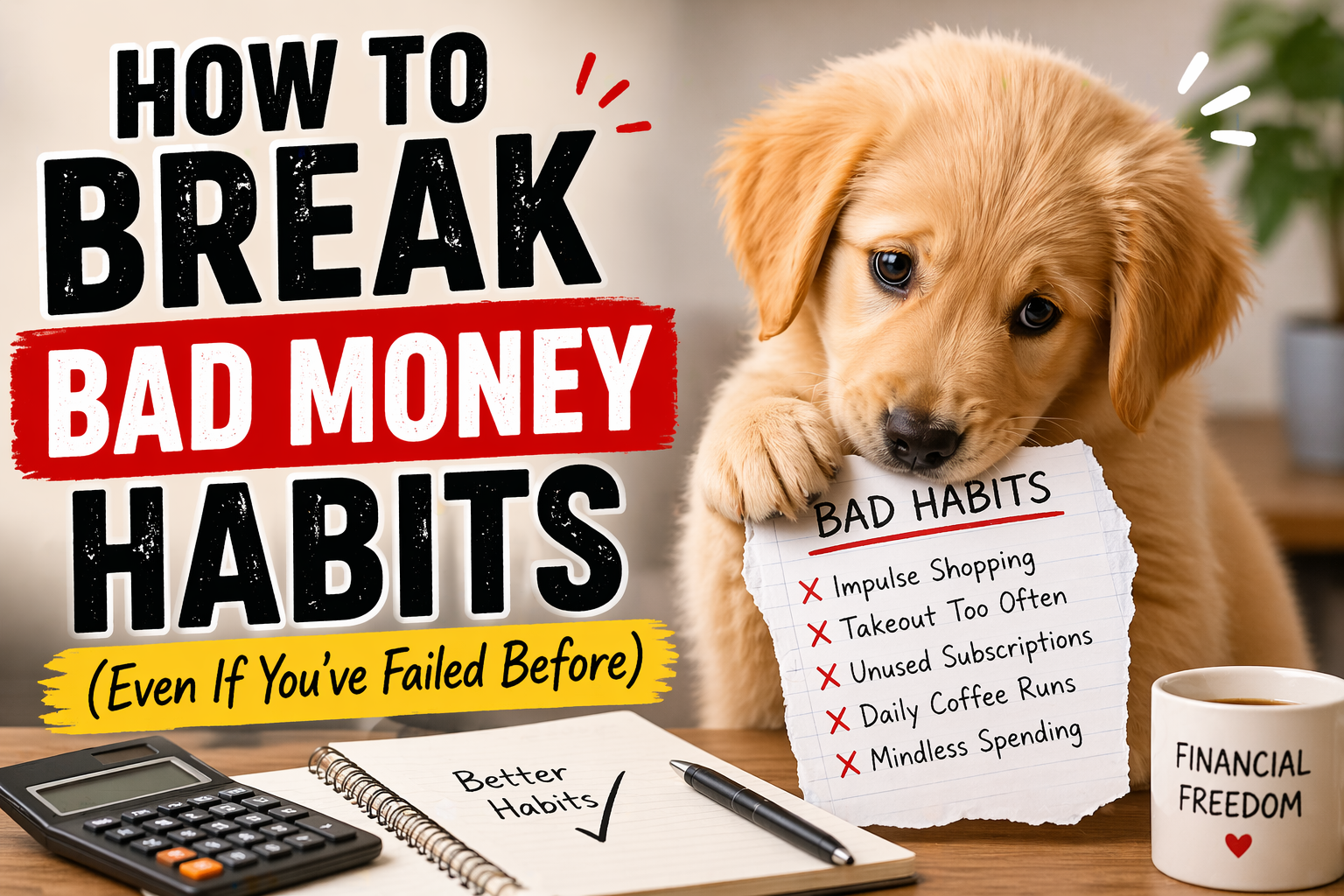
  • How to Break Bad Money Habits (Even If You’ve Failed Before)

    How to Break Bad Money Habits (Even If You’ve Failed Before)


    Most people don’t fail at saving money because they lack knowledge.

    They fail because of habits.

    You already know what to do.
    Spend less. Save more. Avoid unnecessary purchases.

    It’s not complicated.

    And yet, it doesn’t work.

    Not for long.


    The Real Problem Isn’t Knowledge

    If information alone worked, everyone would be financially stable.

    There are thousands of budgeting tips online.
    Endless advice about saving and investing.

    But people still struggle.

    Why?

    Because knowing something is completely different from doing it consistently.

    And consistency is controlled by habits.


    Why You Keep Falling Back

    You’ve probably experienced this before.

    You decide to change.

    You tell yourself:
    “I’ll stop spending money unnecessarily.”

    For a few days, maybe even a week, you do well.

    Then something small happens.

    You’re tired.
    You’re stressed.
    You just want something easy.

    And suddenly, you’re back to old spending patterns.

    Not because you decided to fail—
    but because your habits took over.


    My Realization (Personal Example)

    There was a time I noticed something strange.

    Every month, I was being charged $10 for a digital service I wasn’t even using.

    I didn’t actively sign up for it recently.
    I wasn’t opening the app.
    I didn’t even think about it.

    But the money kept going out.

    Automatically.

    At first, I ignored it.

    “It’s just $10.”

    That’s what I told myself.

    But then I stopped and actually calculated it.

    $10 a month becomes $120 a year.

    And I had been paying for it without even realizing it.

    That’s when it hit me.

    I wasn’t choosing to spend money.

    I was just not stopping it.

    That’s what bad money habits look like.

    They don’t feel like decisions.

    They feel invisible.


    Why Habits Are So Powerful

    Habits don’t require effort.

    They run automatically.

    That’s why they’re dangerous.

    Good intentions require energy.
    Habits don’t.

    When you’re tired or distracted, your brain defaults to what’s easiest.

    And for most people, that means spending.


    The Biggest Mistake People Make

    Most people try to fix their money problems with willpower.

    “I’ll just be more disciplined.”
    “I’ll try harder this time.”

    That approach almost always fails.

    Because willpower runs out.

    Especially after a long day, stress, or fatigue.

    You don’t need more discipline.

    You need a better system.


    What Actually Works

    Instead of trying to control your behavior, change your environment.

    Make bad spending harder.

    Make good decisions easier.

    Start with simple changes:

    • Remove your card from shopping apps
    • Turn off automatic subscriptions you don’t need
    • Delete apps that trigger unnecessary spending
    • Create friction before every purchase

    When the action becomes inconvenient, the habit weakens.


    This Is Where Most People Struggle

    Most people don’t even realize how often they spend without thinking.

    That’s why this is important:

    👉 How to Stop Impulse Spending (Even If You Have No Discipline)


    The Truth About Change

    You don’t break habits by fighting them.

    You break them by making them impossible to continue.

    Successful people aren’t stronger.

    They just set up their environment differently.


    Final Thought

    You don’t need to become a different person.

    You just need to stop living on autopilot.

    Because that’s where most financial mistakes happen.
  • Why Small Expenses Are Keeping You Poor (The Coffee Trap Explained)

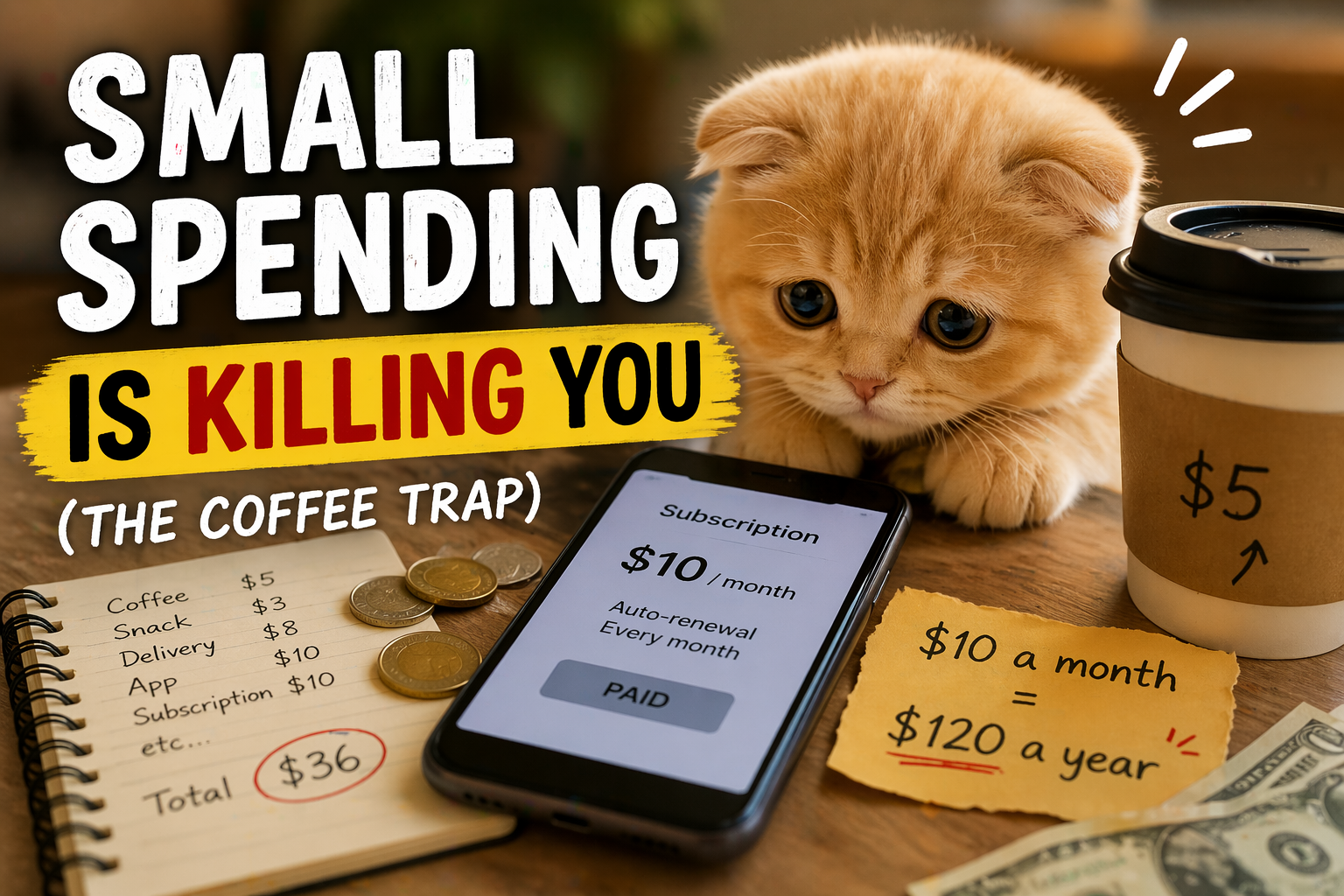
    Why Small Expenses Are Keeping You Poor (The Coffee Trap Explained)


    Most people don’t realize this, but it’s not the big purchases that keep them broke.

    It’s the small ones.

    The daily coffee.
    The random food delivery.
    The “it’s only $5” mindset.

    Individually, they feel harmless.
    Together, they quietly destroy your financial future.


    The Biggest Lie About Money

    People think:

    “I don’t spend that much.”

    And they’re technically right.

    You don’t spend a lot at once.
    You spend a little… over and over again.

    That’s the real problem.

    Small expenses don’t feel dangerous.
    So your brain ignores them.


    The Coffee Trap (Real Example)

    Let’s break it down:

    $5 coffee per day
    = $150 per month
    = $1,800 per year

    Now stretch that over time:

    It becomes a serious amount of money.

    And coffee is just one example.


    The Subscription Trap (Real Story)

    There was a point where I realized something uncomfortable.

    I was paying $10 every month for a digital service I wasn’t even using.

    At first, it didn’t feel like a big deal.
    Ten dollars is nothing, right?

    That’s exactly how it starts.

    These platforms are designed this way.
    They push automatic billing because they know most people won’t check.

    If you don’t pay attention, the money just keeps leaving your account.

    Quietly. Repeatedly.

    And that’s what happened to me.

    I wasn’t actively choosing to spend money.
    I was just… not stopping it.

    Now think about it.

    $10 a month doesn’t feel like much.
    But over a year, that’s $120.

    Would you willingly pay $120 for something you don’t even use?

    Probably not.

    But that’s exactly what I was doing.

    If this feels familiar, you’re not alone.

    Many people don’t even realize how often they spend without thinking

    .https://simplecostlife.com/how-to-build-an-emergency-fund-fast-in-2026-even-if-youre-starting-from-zero/


    Why Small Spending Is More Dangerous Than Big Spending

    Big purchases make you think.

    Small purchases make you react.

    And reacting is where money disappears.

    Small spending feels invisible.
    That’s why it’s dangerous.


    The Real Problem Isn’t Coffee

    Coffee isn’t the problem.

    Subscriptions aren’t the problem.

    The real problem is this mindset:

    “I can afford this.”

    Yes, you can.

    But can you afford it every day for the next year?

    That’s the question most people never ask.


    How to Fix It (Simple Method)

    You don’t need to stop spending.

    You need to become aware.

    Start with this:

    1. Track every expense for 7 days
    2. Add everything at the end
    3. Look at the total

    Then:

    • Cut what you don’t value
    • Keep what actually matters

    That’s how real saving begins.


    Final Truth

    People don’t go broke overnight.

    They go broke slowly.

    One small decision at a time.

  • How to Stop Impulse Spending (Even If You Have No Discipline)

    How to Stop Impulse Spending (Even If You Have No Discipline)

    Most people think they have a discipline problem.

    They don’t.

    They have a system problem.


    Why impulse spending feels uncontrollable

    You don’t randomly spend money.

    There’s always a trigger.

    • Bored
    • Stressed
    • Tired
    • Rewarding yourself

    Spending becomes automatic.

    Not because you’re weak.

    Because your environment allows it.


    The real problem: no pause

    Impulse spending happens in seconds.

    See → Want → Buy

    No gap.

    No thinking.

    No resistance.


    ⚠️ Quick Check

    Think about your last purchase.

    Did you plan it?

    Or did it just happen?

    If it “just happened,”
    that’s impulse spending.


    Step 1: Create a delay

    This is the simplest fix.

    Before buying anything:

    👉 wait 24 hours

    That’s it.

    Most urges disappear.


    Step 2: Remove easy access

    Make spending harder.

    • Remove saved cards
    • Log out of shopping apps
    • Don’t keep payment info stored

    More friction = fewer mistakes.


    Step 3: Replace the habit

    You can’t just stop spending.

    You need a replacement.

    Example:

    • Want to buy something → transfer money to savings
    • Feel stressed → go for a walk
    • Bored → do something else

    Same trigger.

    Different action.

    https://simplecostlife.com/50-30-20-rule-explained


    Step 4: Track your triggers

    Start noticing patterns.

    When do you spend the most?

    • Late night?
    • After work?
    • When you’re stressed?

    Once you see it,

    you can control it.


    Step 5: Set a spending rule

    Give yourself a boundary.

    Example:

    • “No purchases after 9PM”
    • “No online shopping during weekdays”

    Simple rules work better than complicated systems.


    What changed for me

    I used to spend small amounts without thinking.

    Not big purchases.

    Just random ones.

    $5, $10, $15.

    It didn’t feel serious.

    But it added up.

    Once I started pausing before buying,
    I realized something:

    Most of it wasn’t necessary.

    I just didn’t give myself time to think.


    Why this works

    Impulse spending isn’t about money.

    It’s about behavior.

    If you control the moment,

    you control the outcome.


    What’s next

    Now that you can stop spending impulsively,

    the next step is understanding why saving still feels hard.

    👉 That’s where most people get stuck.


    Conclusion

    You don’t need more discipline.

    You need a system that slows you down.

    Create a pause.

    Remove access.

    Replace the habit.

    That’s how you win.

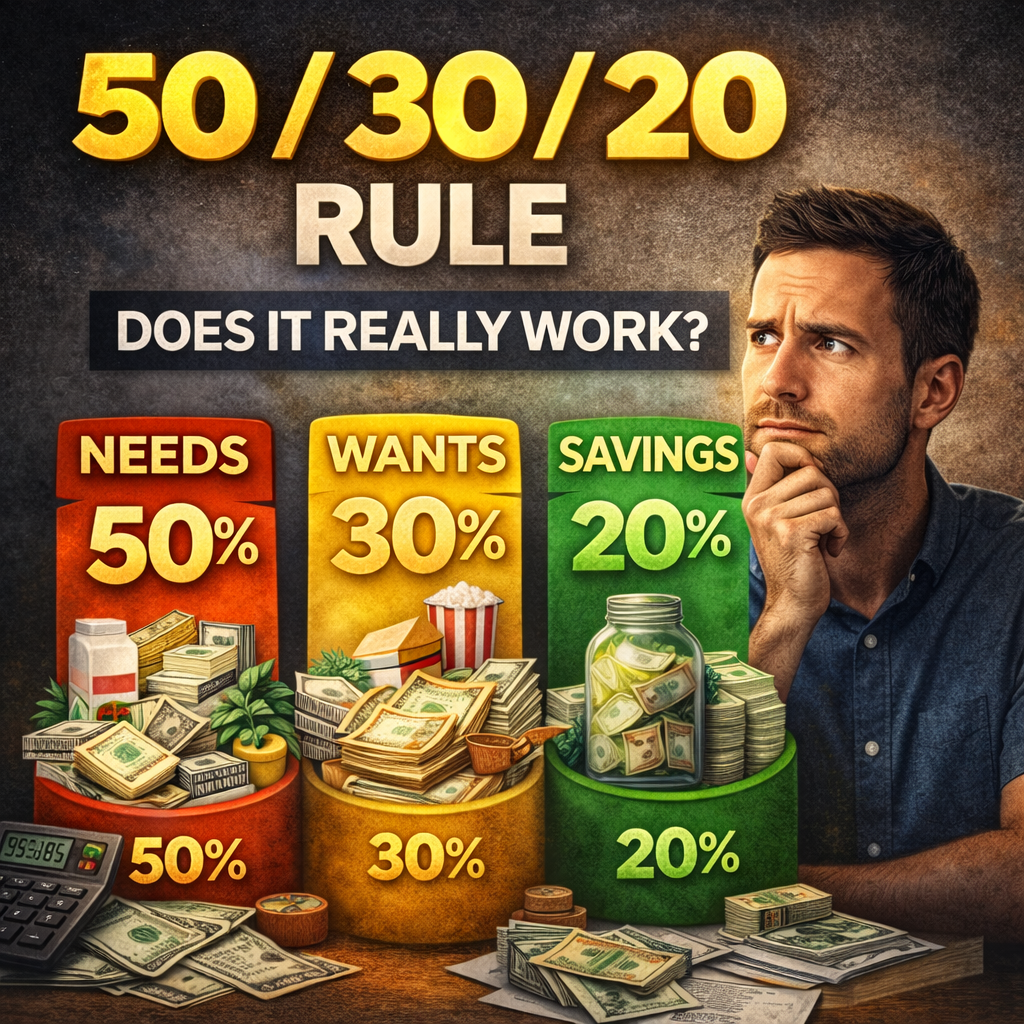
  • The 50/30/20 Rule Explained (And Why It Doesn’t Work for Everyone)

    The 50/30/20 Rule Explained (And Why It Doesn’t Work for Everyone)

    The 50/30/20 rule is one of the most popular budgeting methods.

    It sounds simple.

    It sounds smart.

    But here’s the truth:

    It doesn’t work for everyone.


    What is the 50/30/20 rule?

    It divides your income into three parts:

    • 50% → Needs (rent, bills, groceries)
    • 30% → Wants (entertainment, eating out)
    • 20% → Savings

    That’s it.

    No apps. No complicated tracking.

    Just a simple structure.


    Why people like it

    Because it feels balanced.

    You’re not cutting everything.

    You’re not forcing extreme saving.

    You’re just organizing your money.


    The problem nobody talks about

    This rule assumes one thing:

    👉 Your expenses fit into neat percentages.

    But in real life, they don’t.


    Example (real situation)

    Let’s say you make $2,000/month.

    According to the rule:

    • Needs → $1,000
    • Wants → $600
    • Savings → $400

    Sounds good.

    But what if:

    • Your rent alone is $1,200?

    The system breaks instantly.

    How Much Should You Save Each Month?


    Why it fails for many people

    1. Fixed costs are too high

    Rent, debt, bills.

    These don’t adjust easily.


    2. Income is inconsistent

    Freelancers, business owners, part-time workers.

    Monthly percentages don’t stay stable.


    3. It ignores behavior

    Budgeting isn’t math.

    It’s habit.

    You can follow percentages perfectly
    and still overspend.


    ⚠️ Quick Check (Don’t Skip)

    Think about your last month:

    Did your spending follow any structure?

    Or did it just happen?

    If it “just happened,”
    no rule will fix that.


    So should you ignore the 50/30/20 rule?

    No.

    But don’t follow it blindly.


    A better way to use it

    Instead of strict percentages:

    👉 Use it as a reference, not a rule.

    For example:

    • Needs → as low as possible
    • Savings → as high as sustainable
    • Wants → flexible


    What actually works better

    A simpler system:

    1. Pay yourself first (automatic saving)
    2. Cover essential expenses
    3. Spend what’s left

    No rigid numbers.

    Just a working structure.


    What changed for me

    I tried to follow a perfect system before.

    It didn’t last.

    Because my expenses didn’t fit the rule.

    But when I switched to automatic saving first,
    everything became easier.

    The structure mattered more than the percentages.


    Why this matters

    People fail not because budgeting is hard.

    They fail because they follow systems
    that don’t match their reality.


    What’s next

    If fixed percentages don’t work for you,

    👉 the next step is building a budget that actually fits your life.

    I’ll show you how in the next post.


    Conclusion

    The 50/30/20 rule is a good starting point.

    But it’s not the answer.

    Use it as a guide.

    Not as a rule you must follow.

  • How Much Should You Automatically Save Each Month? (Real Numbers Guide)

    How Much Should You Automatically Save Each Month? (Real Numbers Guide)

    Most people don’t fail at saving because they’re lazy.

    They fail because they don’t know how much is “right.”

    Save too little → nothing changes.
    Save too much → you quit.

    So the real question is:

    How much should you automatically save every month?


    The wrong way to think about saving

    Most people start like this:

    “I’ll save whatever I can.”

    That sounds flexible, but in reality, it means:

    You save nothing consistently.

    Because saving becomes optional.

    And optional things don’t last.


    The real rule: percentage, not emotion

    Instead of guessing, use a simple structure.

    Here’s a realistic breakdown:

    • Beginner: 5% of your income
    • Stable: 10% of your income
    • Aggressive: 15–20%

    Example:

    • $2,000 income → $100 (5%)
    • $3,000 income → $300 (10%)
    • $5,000 income → $750 (15%)

    The goal isn’t perfection.

    It’s consistency.


    Start smaller than you think

    This is where most people mess up.

    They try to save too much too fast.

    Then they feel pressure.

    Then they stop.

    A better approach:

    • Start with something easy ($20, $50, $100)
    • Make it automatic
    • Forget about it

    Small amounts that run every month
    beat big plans that fail.

    How Automatic Saving Works


    Your lifestyle matters more than your income

    Two people can earn the same money
    and have completely different results.

    Why?

    Because of fixed expenses.

    • Rent
    • Debt
    • Subscriptions
    • Daily habits

    That’s why your saving number should feel:

    👉 slightly uncomfortable, but sustainable

    Not painful.


    The simple formula anyone can follow

    If you don’t want to think too much, use this:

    Step 1: Start with 5%
    Step 2: Run it automatically
    Step 3: Increase every 2–4 weeks

    Example:

    • Month 1 → 5%
    • Month 2 → 7%
    • Month 3 → 10%

    No stress. No burnout.


    What changed for me

    I used to spend around $10 every month on an online game.

    It felt like nothing.

    But after I saved my first $1,000, I realized something:

    That money wasn’t small.

    It was automatic.

    So I made one simple switch.

    I didn’t stop it.

    I redirected it.

    Now that same $10 goes into my savings every month.

    No effort. No thinking.

    And that’s when it finally started working.


    ⚠️ Quick Reality Check (Stay Here for 10 Seconds)

    Answer this honestly:

    • Do you know your exact saving percentage?
    • Or are you guessing every month?

    If you’re guessing,
    you don’t have a system yet.


    Why this works

    Saving isn’t about motivation.

    It’s about removing decisions.

    Once your number is clear,
    everything becomes easier.

    You don’t debate.

    You just follow the system.


    What’s next

    Now you know how much to save.

    But there’s a bigger question:

    Where should that money go?

    Savings account?
    Investments?
    Something else?

    I’ll break that down next.


    Conclusion

    You don’t need the perfect number.

    You need a number that runs every month.

    Start small.
    Stay consistent.
    Increase slowly.

    That’s how saving actually works.

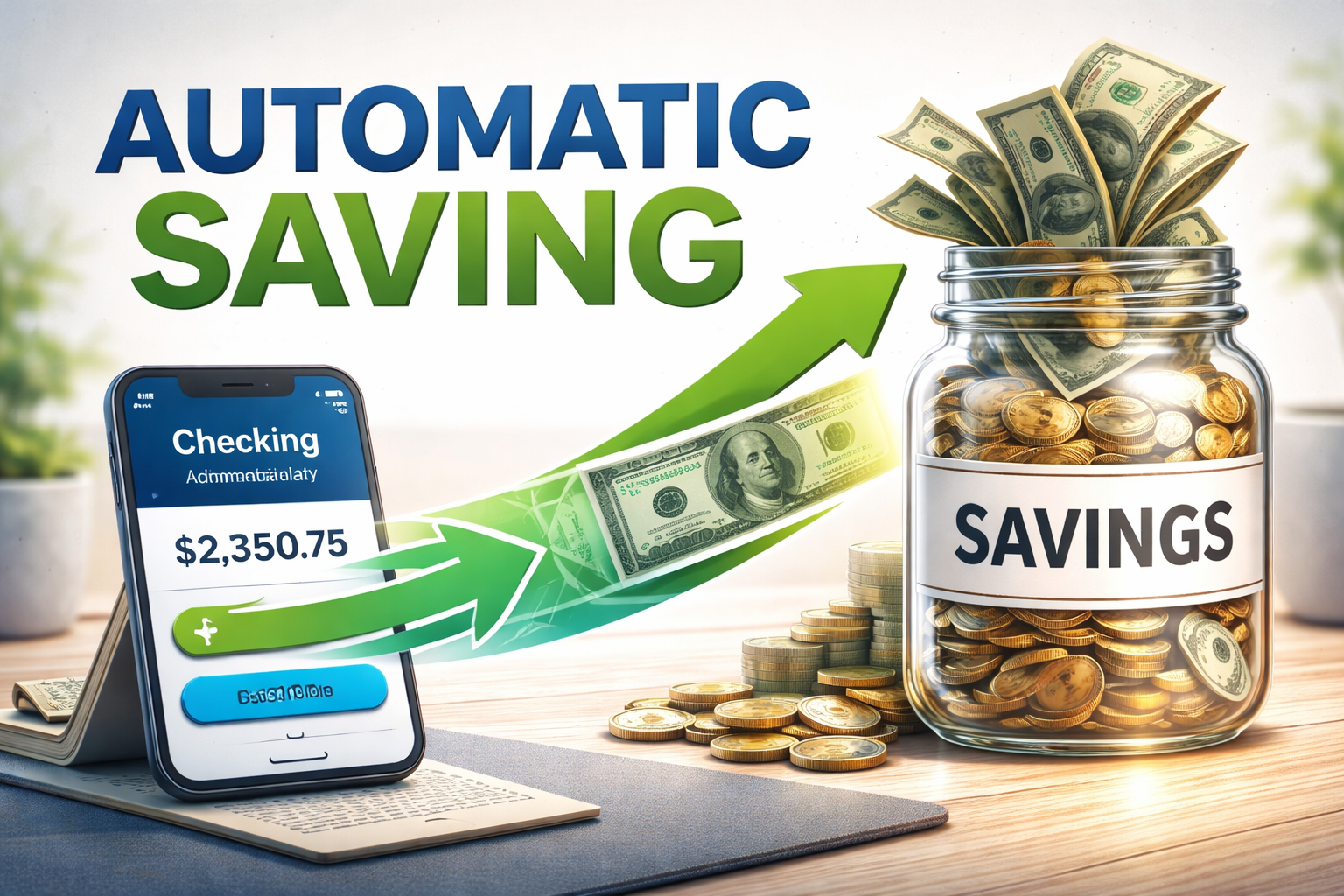
  • How Automatic Saving Works (And Why It Changes Everything)

    How Automatic Saving Works (And Why It Changes Everything)

    Most people think saving money is about discipline.

    It’s not.

    It’s about structure.

    Because the truth is simple:

    If saving depends on willpower, it won’t last.


    Why most people fail to save

    People usually say:

    “I’ll save what’s left at the end of the month.”

    But there’s one problem.

    There’s never anything left.

    Expenses expand.
    Small purchases add up.
    Unexpected things happen.

    So saving gets delayed… again and again.

    Not because you’re lazy —
    but because your system is broken.


    The real shift: Save first

    There’s one rule that changes everything:

    Save first. Spend what’s left.

    Not the other way around.

    And the easiest way to do that?

    Make it automatic.


    How automatic saving actually works

    Automatic saving removes the hardest part:

    Deciding every time.

    Money comes in → money moves out → you live on the rest.

    No thinking.
    No debating.
    No “I’ll do it next month.”


    How to set it up (step-by-step)

    1. Create two accounts

    You need separation.

    • Main account (income comes here)
    • Savings account (you don’t touch)

    Same bank is fine.
    Different bank is even better.


    2. Set up automatic transfer

    Go into your banking app and find:

    • Transfer
    • Scheduled transfer
    • Auto transfer

    Set it like this:

    • From: main account
    • To: savings account
    • Date: right after payday
    • Amount: start small ($10 ~ $100)


    3. Start smaller than you think

    Don’t try to be impressive.

    Try to be consistent.

    Even $10 works.

    Because the goal is not the amount —
    it’s the habit running without effort.


    4. Make it harder to touch

    This matters more than people think.

    • Don’t link a debit card
    • Don’t check it daily
    • Don’t treat it like spending money

    If it’s easy to access,
    you will use it.


    5. Increase slowly

    After a few weeks:

    • Increase a little
    • Example: $50 → $70 → $100

    No pressure.
    Just progression.

    If saving still feels hard, start here:

    https://simplecostlife.com/how-to-grow-money-after-first-1000


    Real ways people do this

    You don’t need anything complicated.

    Here are simple options:


    Separate savings account

    Basic but powerful.

    Money moves automatically every payday.

    You don’t see it.
    You don’t touch it.


    High-yield savings account

    Your money earns interest while sitting.

    Safe.
    Simple.
    Better than doing nothing.


    Auto-saving apps

    Some apps automate everything.

    • Acorns → rounds up purchases
    • Chime → auto-save features
    • Oportun → moves money automatically

    You barely notice it happening.

    That’s the point.


    Automatic investing (next level)

    Once you’re comfortable:

    • Set monthly investment
    • Example: $50/month into index funds

    No timing.
    No guessing.

    Just consistency.


    What changed for me

    I used to spend about $10 every month on an online game.

    At the time, it felt like nothing.

    But after I saved my first $1,000, I started paying attention.

    That small, automatic expense had been running for months
    without me even noticing.

    So I made a simple change.

    I didn’t just stop it.

    I redirected it.

    Now, that same $10 moves automatically into my savings every month.

    I don’t think about it anymore.

    And that’s exactly why it works.


    Stop and think (important)

    Quick check:

    Is your saving automatic?

    Or are you deciding every month?

    If you have to think about it,
    you’re already losing.


    Why this works

    Automatic saving removes effort.

    And effort is where most people fail.

    You don’t need motivation.
    You don’t need discipline.

    You need a system that runs without you.


    What’s next

    Setting up automatic saving is just the beginning.

    The next step is knowing how much to automate
    without hurting your lifestyle.

    I’ll break that down in the next post.


    Conclusion

    You don’t save money by trying harder.

    You save money by removing the need to try at all.

    Set it once.
    Let it run.

    And watch what happens.

  • Why Being Busy Is Making You Poor (The Time Trap Nobody Talks About)

    Why Being Busy Is Making You Poor (The Time Trap Nobody Talks About)


    Introduction

    Most people think being busy means being productive.

    If your schedule is full,
    you feel like you’re doing something right.

    But here’s the uncomfortable truth:

    Being busy is often the reason you’re still broke.


    The Problem No One Talks About

    Not all work creates money.

    Some work just keeps you occupied.

    You answer messages.
    You run errands.
    You fix small problems all day.

    At the end of the day, you’re exhausted.

    But your bank account hasn’t changed.


    Busy vs Productive

    Being busy means:

    • You’re doing a lot of things
    • You’re constantly moving
    • You feel tired at the end of the day

    Being productive means:

    • You’re doing the right things
    • You’re creating value
    • You’re moving toward financial growth

    Most people confuse the two.


    The Time Trap

    Here’s where it gets dangerous.

    The more busy you are,
    the less time you have to think.

    And if you don’t think,
    you don’t change your system.

    So you stay stuck.

    Working more…
    but earning the same.


    A Real Example

    I used to think I was working hard.

    My days were full.

    I was constantly doing something —
    checking things, handling small tasks,
    dealing with daily issues.

    From the outside, it looked like I was busy all day.

    But when I actually checked my results,
    nothing was really growing.

    Income didn’t increase.
    Savings didn’t build.

    I wasn’t lazy.
    I was just stuck doing low-value work.

    That’s when I realized something:

    Being busy was actually hiding the real problem.


    The 3 Hidden Mistakes

    1. Doing urgent things instead of important ones

    You react all day instead of building something.


    2. Mistaking effort for progress

    Just because you worked hard
    doesn’t mean you moved forward.


    3. Avoiding deep thinking

    Real growth requires stopping and thinking.
    Busy people don’t do that.


    How to Fix It

    You don’t need more time.

    You need a different structure.

    Start with this:

    • Cut low-value tasks
    • Block time for high-impact work
    • Focus on things that can grow income

    Even 2 hours of focused work
    is more powerful than 10 hours of random activity.


    Conclusion

    Being busy feels safe.

    It gives you the illusion of progress.

    But if your money isn’t growing,
    something is wrong.

    Don’t just work more.

    Work differently.

  • Why You Keep Spending Money Without Realizing It (Hidden Triggers)

    Why You Keep Spending Money Without Realizing It (Hidden Triggers)

    Introduction

    You don’t spend money because you’re irresponsible.

    You spend money because your environment is designed to make you spend.

    Most people think overspending is a discipline problem.
    It’s not.

    It’s a trigger problem.

    And the worst part?
    You usually don’t even notice it happening.


    The Truth About Spending

    Think about the last time you bought something you didn’t plan to.

    You didn’t wake up thinking:
    “I’m going to waste money today.”

    Something triggered it.

    • A notification
    • A discount
    • Boredom
    • Stress
    • Social media

    Spending is rarely a conscious decision.
    It’s a reaction.


    Hidden Trigger #1: Your Phone Is a Shopping Machine

    Your phone is not neutral.

    Every app is fighting for your attention — and your money.

    • Flash sales
    • “Only 2 left” alerts
    • Personalized ads
    • One-click checkout

    You don’t decide to spend.

    You get pushed into spending.


    Hidden Trigger #2: Boredom Feels Like a Problem to Solve

    When you’re bored, your brain looks for stimulation.

    And the fastest way?

    Buying something.

    It feels like progress.
    It feels like reward.

    But it’s temporary.

    That’s why people say:
    “I don’t even know where my money went.”


    Hidden Trigger #3: Stress Spending

    Bad day?

    You don’t want a solution.
    You want relief.

    So you buy:

    • Food
    • Small items
    • Subscriptions
    • Random online deals

    It’s not about the item.
    It’s about changing how you feel.


    Hidden Trigger #4: Social Comparison

    You see someone living better than you.

    Better car.
    Better clothes.
    Better lifestyle.

    You don’t think — you react.

    Spending becomes a way to “catch up.”

    Even when you can’t afford it.


    Hidden Trigger #5: Friction Is Too Low

    Spending used to be harder.

    Now?

    • Saved cards
    • Auto-fill
    • Apple Pay / Google Pay
    • Instant checkout

    No thinking.
    No pause.

    Just tap → spend.


    So What’s the Real Problem?

    It’s not that you spend too much.

    It’s that your system allows it.

    If your environment is full of triggers,
    you will keep spending — no matter how motivated you are.


    The Real Fix (This Changes Everything)

    You don’t need more discipline.

    You need fewer triggers.

    Start simple:

    • Turn off shopping notifications
    • Remove saved cards
    • Delete unnecessary apps
    • Avoid “just browsing”

    Make spending harder.

    Not easier.


    Next Step

    Once you remove triggers, everything becomes easier.

    👉 Read this next:
    <a href=”https://simplecostlife.com/how-to-stop-impulse-spending”>
    How to Stop Impulse Spending (Even If You Have No Discipline)
    </a>


    Final Thought

    You are not bad with money.

    You’re just surrounded by systems designed to take it.

    Fix the environment.

    And your money will start staying with you.

  • How to Build an Emergency Fund Fast in 2026 (Even If You’re Starting From Zero)

    emergency fund savings concept with cash money and financial safety in 2026


    Unexpected expenses can happen anytime.

    A medical bill, a car repair, or a sudden financial problem can put you in a difficult situation if you don’t have savings.

    That’s why having an emergency fund is no longer optional in 2026 — it’s essential.


    Why an Emergency Fund Is So Important

    Many people focus only on earning or investing money.

    But what happens when something goes wrong?

    Without cash available, you’re forced to make bad decisions:

    • Taking high-interest loans
    • Selling assets at the wrong time
    • Stressing over every small expense

    An emergency fund protects you from all of this.


    A Personal Lesson About Cash Flow

    I learned this lesson the hard way.

    At one point, I focused too much on investing and put most of my money into one place.

    When things didn’t go as planned, I suddenly found myself with very little cash.

    That was one of the most difficult periods for me.

    Even worse, some of my investments were tied to real estate.

    And when the market slowed down, I couldn’t sell those properties easily.

    I had assets — but no cash.

    That’s when I truly understood:

    Cash is not optional. It’s necessary.


    How Much Should You Save?

    A common recommendation is:

    • Minimum: $500 to $1,000
    • Ideal: 3 to 6 months of living expenses

    But if you’re just starting, don’t worry about big numbers.

    Start small.

    Even $100 is better than nothing.


    Step 1: Start With a Small Target

    Don’t try to save thousands immediately.

    Set a simple goal:

    • First $100
    • Then $500
    • Then $1,000

    Small wins build momentum.


    Step 2: Automate Your Savings

    Make saving automatic.

    Set up a system where a portion of your income goes directly into a separate account.

    If you don’t see the money, you won’t spend it.


    Step 3: Use a Separate Account

    Keep your emergency fund separate from your daily spending money.

    This reduces the temptation to use it.

    Out of sight, out of mind.


    Step 4: Cut Just One Expense

    You don’t need to change everything.

    Start by cutting just one unnecessary expense:

    • One subscription
    • One habit
    • One weekly expense

    Redirect that money into your emergency fund.


    Step 5: Stay Consistent

    Building an emergency fund is not about speed.

    It’s about consistency.

    Even small amounts, saved regularly, will grow over time.


    Final Thoughts

    Many people think investing is the key to financial success.

    But without a solid cash foundation, even good investments can fail.

    From my own experience, having no cash during difficult times is far worse than having no investments.

    Start building your emergency fund today.

    Your future self will thank you.

  • Why You’re Always Broke in 2026 (7 Money Habits That Are Draining Your Wallet)


    Money habits that waste money in 2026 and how to fix them

    Most people think the problem is low income. But in reality, it’s often small daily habits that quietly drain your money over time.

    If you feel like you’re always running out of money, you’re not alone.

    In 2026, the real challenge isn’t earning more — it’s stopping unnecessary money leaks.


    Why Small Habits Matter More Than You Think

    Many people ignore small expenses because they seem insignificant.

    But here’s the truth:

    Small spending, repeated daily, becomes a big financial problem.

    I learned this the hard way.


    1. Ignoring Small Subscriptions

    At one point, I had a Disney+ subscription.

    It was cheap, so I didn’t pay much attention to it. I barely used it, but I never canceled it.

    Three years later, I checked how much I had spent.

    It was a lot more than I expected.

    What felt like a small monthly payment turned into a surprisingly large amount over time.

    That’s the danger of ignoring “small” expenses.


    2. Buying Cheap Things Too Often

    Cheap items feel harmless.

    You see something for a few dollars and think, “It’s cheap, why not?”

    But this is where many people lose money.

    The cheaper the item, the easier it is to buy without thinking.

    And that’s exactly the problem.

    Buying many cheap things often costs more than buying fewer valuable things.


    3. Impulse Buying Without Thinking

    You see something, you like it, and you buy it immediately.

    No plan. No need. Just emotion.

    This habit slowly destroys your finances.

    A simple rule can help:

    Wait 24 hours before buying anything non-essential.

    Most of the time, you won’t even want it anymore.


    4. Eating Out Too Frequently

    Food is necessary.

    But eating out all the time is expensive.

    Ordering delivery or grabbing food outside may feel convenient, but it adds up fast.

    Cooking at home just a few more times per week can save a significant amount of money.


    5. Treating Coffee Like a Necessity

    Many people treat coffee as a daily essential.

    But it’s not.

    Buying coffee every day may seem small, but over time, it becomes a major expense.

    For example:

    Spending $5 a day on coffee equals about $150 per month.

    That’s money that could be saved or invested.


    6. Not Tracking Your Spending

    If you don’t know where your money is going, you can’t control it.

    Many people avoid checking their expenses because it feels uncomfortable.

    But ignoring it makes things worse.

    Even tracking your spending for just one week can completely change your awareness.


    7. Living Without a Budget

    Without a plan, money disappears.

    Budgeting doesn’t mean restriction.

    It means giving your money a direction.

    Even a simple weekly budget can help you stay in control and avoid unnecessary spending.


    A Personal Lesson About Money

    I once believed making money quickly was the key.

    I focused too much on growing money fast instead of managing it properly.

    That didn’t end well.

    What I learned is simple:

    It’s not just about making money — it’s about keeping it.

    And that starts with controlling your daily habits.


    How to Fix These Habits

    You don’t need to change everything at once.

    Start small:

    • Track your spending for a week
    • Cancel unused subscriptions
    • Apply the 24-hour rule
    • Set a simple weekly budget

    Small changes lead to big results.


    Final Thoughts

    Being broke is not always about income.

    It’s often about habits.

    If you can control small daily decisions, you can completely change your financial future.

    Start today.