Tag: save money tips

  • How Much Is $10 in the Philippines?

    How Much Is $10 in the Philippines?

    And Why “Save in the U.S., Spend Smart in the Philippines” Matters


    In the United States, $10 doesn’t go very far.
    It might cover one or two coffees, and even a simple meal can feel like a stretch.

    But spend that same $10 in the Philippines, and the story completely changes.


    1. Exchange Rate Perspective

    As of now,
    1 USD is roughly around 56 to 58 PHP.

    So,
    $10 ≈ 560 to 580 pesos

    At first glance, it may not seem like a big difference.
    But the real gap starts here.


    2. The Real Difference: Lifestyle Impact

    In the U.S., $10 can get you:

    • 1–2 cups of coffee
    • A basic fast-food meal

    In the Philippines, $10 can cover:

    • 2–3 local meals
    • A one-hour massage (depending on location)
    • Multiple short rides (Grab)
    • Several everyday essentials

    Same money,
    completely different spending power


    3. Why This Gap Exists

    This isn’t just about exchange rates.
    It’s about purchasing power.


    Lower Cost of Living

    The Philippines has a lower cost structure overall:

    • Food
    • Transportation
    • Services

    So when you bring in dollars,
    you can afford significantly more


    Fixed Costs Are Much Lower

    In the U.S.:

    • Rent often exceeds $1,500
    • Food expenses can easily reach $500+

    In the Philippines:

    • Condos range around $300 to $600
    • Food expenses can be around $200 to $400

    The key difference is
    how fast your money disappears


    Income vs. Spending Structure

    In the U.S.:

    • Higher income potential
    • Higher cost of living

    In the Philippines:

    • Lower income locally
    • Much lower expenses

    So if you earn in dollars,
    you can live at a much higher standard locally


    4. Why I Emphasize Saving Money

    Most people think saving money means sacrificing comfort.
    But that’s not the real point.

    Money doesn’t have a fixed value.
    Its real value depends on where you use it.

    The same $10 produces completely different results
    depending on the country.

    That’s why saving isn’t just about cutting expenses.

    It’s about deciding where your money works best.


    5. Save in the U.S., Spend Smart in the Philippines

    In the U.S.:

    • Small expenses add up quickly
    • Money disappears faster than expected

    So you need a strategy to protect your money

    In the Philippines:

    • Your money stretches further
    • You can enjoy more with less

    So you need a strategy to use your money effectively


    6. Conclusion

    It’s not just about how much you earn.
    It’s about where and how you spend it.


    Save in the U.S.
    Spend smart in the Philippines.


    Once you understand this,
    saving money is no longer about restriction—
    it becomes a strategy for a better life.
  • Why Small Expenses Are Keeping You Poor (The Coffee Trap Explained)

    Why Small Expenses Are Keeping You Poor (The Coffee Trap Explained)


    Most people don’t realize this, but it’s not the big purchases that keep them broke.

    It’s the small ones.

    The daily coffee.
    The random food delivery.
    The “it’s only $5” mindset.

    Individually, they feel harmless.
    Together, they quietly destroy your financial future.


    The Biggest Lie About Money

    People think:

    “I don’t spend that much.”

    And they’re technically right.

    You don’t spend a lot at once.
    You spend a little… over and over again.

    That’s the real problem.

    Small expenses don’t feel dangerous.
    So your brain ignores them.


    The Coffee Trap (Real Example)

    Let’s break it down:

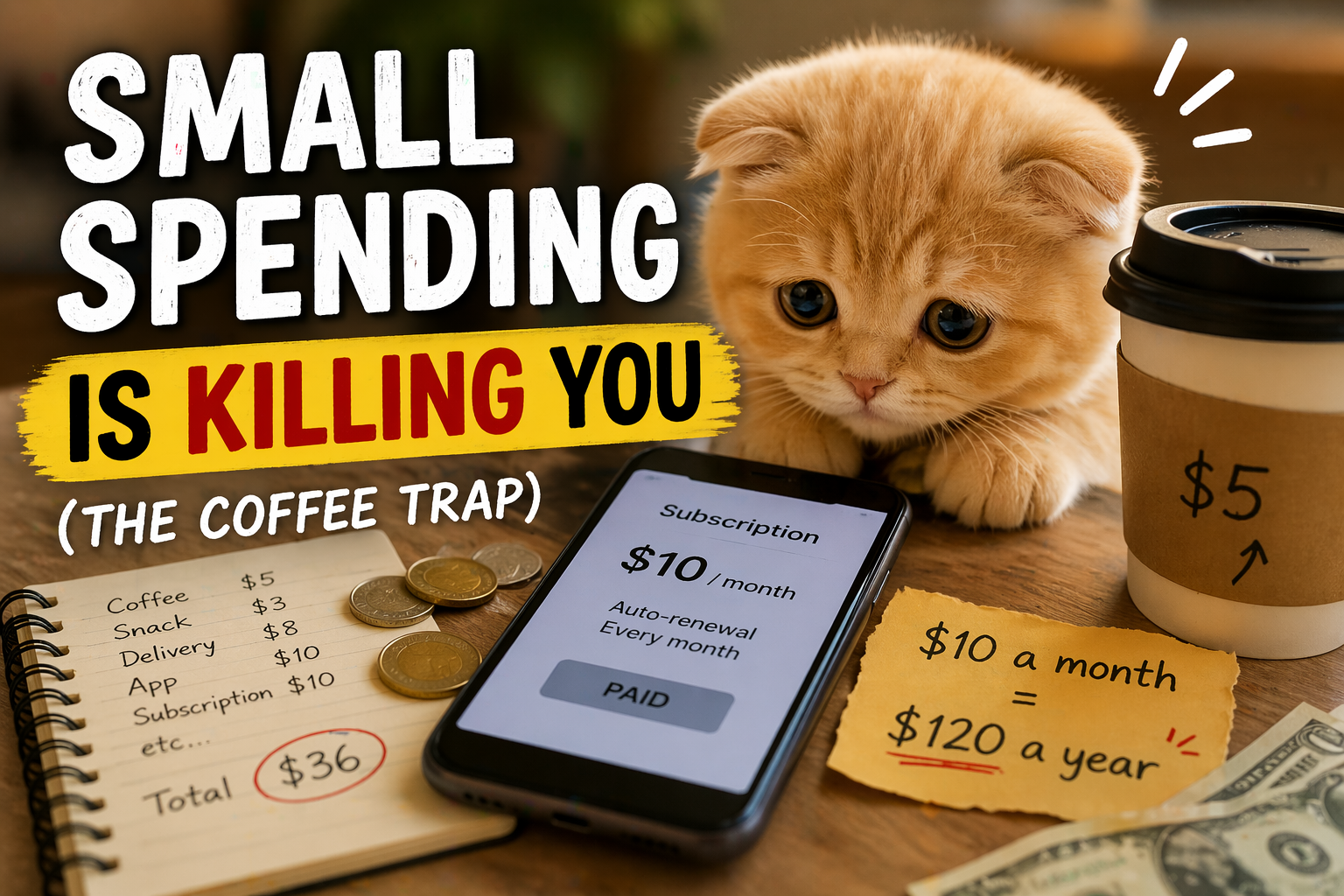
    $5 coffee per day
    = $150 per month
    = $1,800 per year

    Now stretch that over time:

    It becomes a serious amount of money.

    And coffee is just one example.


    The Subscription Trap (Real Story)

    There was a point where I realized something uncomfortable.

    I was paying $10 every month for a digital service I wasn’t even using.

    At first, it didn’t feel like a big deal.
    Ten dollars is nothing, right?

    That’s exactly how it starts.

    These platforms are designed this way.
    They push automatic billing because they know most people won’t check.

    If you don’t pay attention, the money just keeps leaving your account.

    Quietly. Repeatedly.

    And that’s what happened to me.

    I wasn’t actively choosing to spend money.
    I was just… not stopping it.

    Now think about it.

    $10 a month doesn’t feel like much.
    But over a year, that’s $120.

    Would you willingly pay $120 for something you don’t even use?

    Probably not.

    But that’s exactly what I was doing.

    If this feels familiar, you’re not alone.

    Many people don’t even realize how often they spend without thinking

    .https://simplecostlife.com/how-to-build-an-emergency-fund-fast-in-2026-even-if-youre-starting-from-zero/


    Why Small Spending Is More Dangerous Than Big Spending

    Big purchases make you think.

    Small purchases make you react.

    And reacting is where money disappears.

    Small spending feels invisible.
    That’s why it’s dangerous.


    The Real Problem Isn’t Coffee

    Coffee isn’t the problem.

    Subscriptions aren’t the problem.

    The real problem is this mindset:

    “I can afford this.”

    Yes, you can.

    But can you afford it every day for the next year?

    That’s the question most people never ask.


    How to Fix It (Simple Method)

    You don’t need to stop spending.

    You need to become aware.

    Start with this:

    1. Track every expense for 7 days
    2. Add everything at the end
    3. Look at the total

    Then:

    • Cut what you don’t value
    • Keep what actually matters

    That’s how real saving begins.


    Final Truth

    People don’t go broke overnight.

    They go broke slowly.

    One small decision at a time.