Tag: save money

  • The 50/30/20 Rule Explained (And Why It Doesn’t Work for Everyone)

    The 50/30/20 Rule Explained (And Why It Doesn’t Work for Everyone)

    The 50/30/20 rule is one of the most popular budgeting methods.

    It sounds simple.

    It sounds smart.

    But here’s the truth:

    It doesn’t work for everyone.


    What is the 50/30/20 rule?

    It divides your income into three parts:

    • 50% → Needs (rent, bills, groceries)
    • 30% → Wants (entertainment, eating out)
    • 20% → Savings

    That’s it.

    No apps. No complicated tracking.

    Just a simple structure.


    Why people like it

    Because it feels balanced.

    You’re not cutting everything.

    You’re not forcing extreme saving.

    You’re just organizing your money.


    The problem nobody talks about

    This rule assumes one thing:

    👉 Your expenses fit into neat percentages.

    But in real life, they don’t.


    Example (real situation)

    Let’s say you make $2,000/month.

    According to the rule:

    • Needs → $1,000
    • Wants → $600
    • Savings → $400

    Sounds good.

    But what if:

    • Your rent alone is $1,200?

    The system breaks instantly.

    How Much Should You Save Each Month?


    Why it fails for many people

    1. Fixed costs are too high

    Rent, debt, bills.

    These don’t adjust easily.


    2. Income is inconsistent

    Freelancers, business owners, part-time workers.

    Monthly percentages don’t stay stable.


    3. It ignores behavior

    Budgeting isn’t math.

    It’s habit.

    You can follow percentages perfectly
    and still overspend.


    ⚠️ Quick Check (Don’t Skip)

    Think about your last month:

    Did your spending follow any structure?

    Or did it just happen?

    If it “just happened,”
    no rule will fix that.


    So should you ignore the 50/30/20 rule?

    No.

    But don’t follow it blindly.


    A better way to use it

    Instead of strict percentages:

    👉 Use it as a reference, not a rule.

    For example:

    • Needs → as low as possible
    • Savings → as high as sustainable
    • Wants → flexible


    What actually works better

    A simpler system:

    1. Pay yourself first (automatic saving)
    2. Cover essential expenses
    3. Spend what’s left

    No rigid numbers.

    Just a working structure.


    What changed for me

    I tried to follow a perfect system before.

    It didn’t last.

    Because my expenses didn’t fit the rule.

    But when I switched to automatic saving first,
    everything became easier.

    The structure mattered more than the percentages.


    Why this matters

    People fail not because budgeting is hard.

    They fail because they follow systems
    that don’t match their reality.


    What’s next

    If fixed percentages don’t work for you,

    👉 the next step is building a budget that actually fits your life.

    I’ll show you how in the next post.


    Conclusion

    The 50/30/20 rule is a good starting point.

    But it’s not the answer.

    Use it as a guide.

    Not as a rule you must follow.
  • How Automatic Saving Works (And Why It Changes Everything)

    How Automatic Saving Works (And Why It Changes Everything)

    Most people think saving money is about discipline.

    It’s not.

    It’s about structure.

    Because the truth is simple:

    If saving depends on willpower, it won’t last.


    Why most people fail to save

    People usually say:

    “I’ll save what’s left at the end of the month.”

    But there’s one problem.

    There’s never anything left.

    Expenses expand.
    Small purchases add up.
    Unexpected things happen.

    So saving gets delayed… again and again.

    Not because you’re lazy —
    but because your system is broken.


    The real shift: Save first

    There’s one rule that changes everything:

    Save first. Spend what’s left.

    Not the other way around.

    And the easiest way to do that?

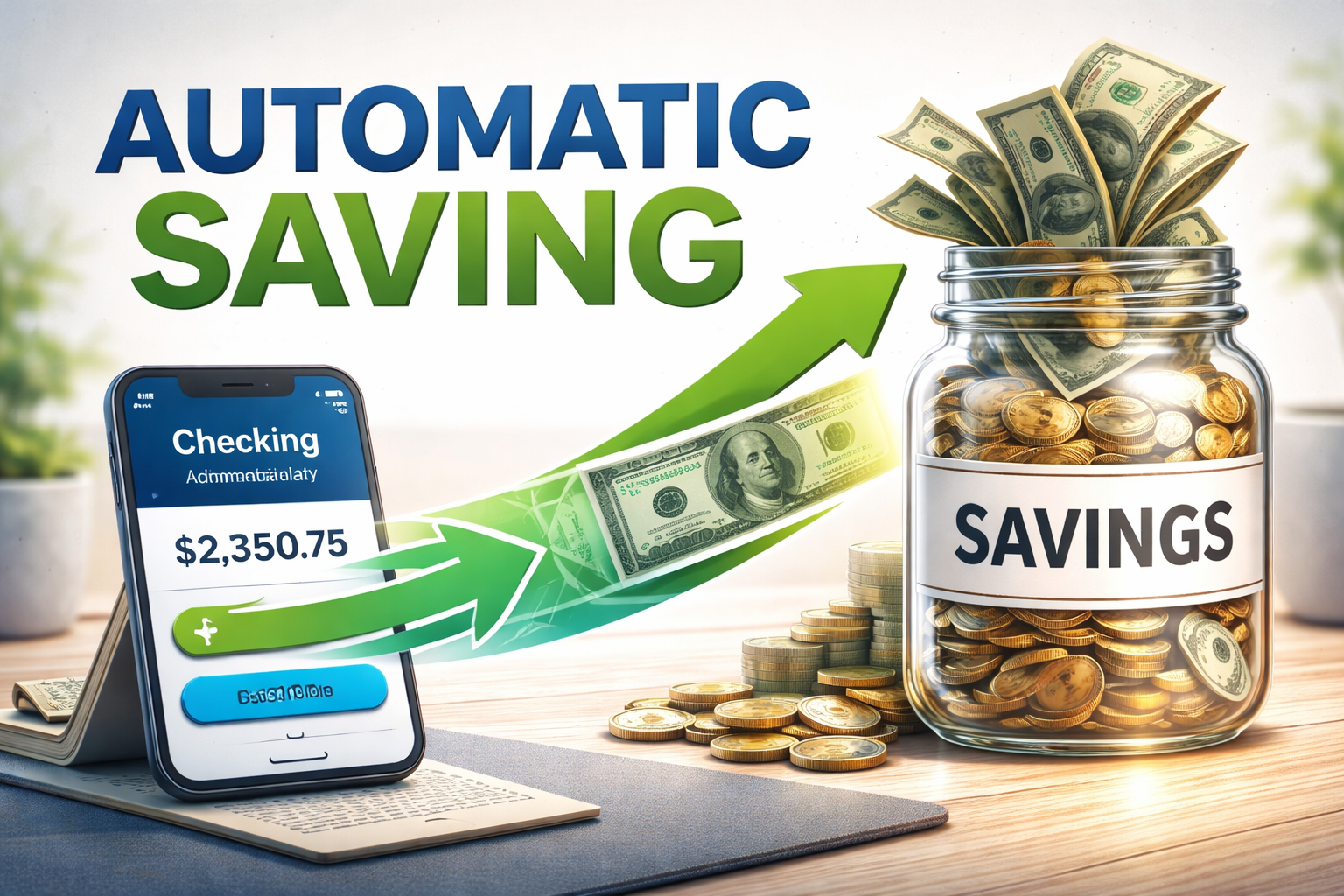
    Make it automatic.


    How automatic saving actually works

    Automatic saving removes the hardest part:

    Deciding every time.

    Money comes in → money moves out → you live on the rest.

    No thinking.
    No debating.
    No “I’ll do it next month.”


    How to set it up (step-by-step)

    1. Create two accounts

    You need separation.

    • Main account (income comes here)
    • Savings account (you don’t touch)

    Same bank is fine.
    Different bank is even better.


    2. Set up automatic transfer

    Go into your banking app and find:

    • Transfer
    • Scheduled transfer
    • Auto transfer

    Set it like this:

    • From: main account
    • To: savings account
    • Date: right after payday
    • Amount: start small ($10 ~ $100)


    3. Start smaller than you think

    Don’t try to be impressive.

    Try to be consistent.

    Even $10 works.

    Because the goal is not the amount —
    it’s the habit running without effort.


    4. Make it harder to touch

    This matters more than people think.

    • Don’t link a debit card
    • Don’t check it daily
    • Don’t treat it like spending money

    If it’s easy to access,
    you will use it.


    5. Increase slowly

    After a few weeks:

    • Increase a little
    • Example: $50 → $70 → $100

    No pressure.
    Just progression.

    If saving still feels hard, start here:

    https://simplecostlife.com/how-to-grow-money-after-first-1000


    Real ways people do this

    You don’t need anything complicated.

    Here are simple options:


    Separate savings account

    Basic but powerful.

    Money moves automatically every payday.

    You don’t see it.
    You don’t touch it.


    High-yield savings account

    Your money earns interest while sitting.

    Safe.
    Simple.
    Better than doing nothing.


    Auto-saving apps

    Some apps automate everything.

    • Acorns → rounds up purchases
    • Chime → auto-save features
    • Oportun → moves money automatically

    You barely notice it happening.

    That’s the point.


    Automatic investing (next level)

    Once you’re comfortable:

    • Set monthly investment
    • Example: $50/month into index funds

    No timing.
    No guessing.

    Just consistency.


    What changed for me

    I used to spend about $10 every month on an online game.

    At the time, it felt like nothing.

    But after I saved my first $1,000, I started paying attention.

    That small, automatic expense had been running for months
    without me even noticing.

    So I made a simple change.

    I didn’t just stop it.

    I redirected it.

    Now, that same $10 moves automatically into my savings every month.

    I don’t think about it anymore.

    And that’s exactly why it works.


    Stop and think (important)

    Quick check:

    Is your saving automatic?

    Or are you deciding every month?

    If you have to think about it,
    you’re already losing.


    Why this works

    Automatic saving removes effort.

    And effort is where most people fail.

    You don’t need motivation.
    You don’t need discipline.

    You need a system that runs without you.


    What’s next

    Setting up automatic saving is just the beginning.

    The next step is knowing how much to automate
    without hurting your lifestyle.

    I’ll break that down in the next post.


    Conclusion

    You don’t save money by trying harder.

    You save money by removing the need to try at all.

    Set it once.
    Let it run.

    And watch what happens.

  • Why You’re Always Broke in 2026 (7 Money Habits That Are Draining Your Wallet)


    Money habits that waste money in 2026 and how to fix them

    Most people think the problem is low income. But in reality, it’s often small daily habits that quietly drain your money over time.

    If you feel like you’re always running out of money, you’re not alone.

    In 2026, the real challenge isn’t earning more — it’s stopping unnecessary money leaks.


    Why Small Habits Matter More Than You Think

    Many people ignore small expenses because they seem insignificant.

    But here’s the truth:

    Small spending, repeated daily, becomes a big financial problem.

    I learned this the hard way.


    1. Ignoring Small Subscriptions

    At one point, I had a Disney+ subscription.

    It was cheap, so I didn’t pay much attention to it. I barely used it, but I never canceled it.

    Three years later, I checked how much I had spent.

    It was a lot more than I expected.

    What felt like a small monthly payment turned into a surprisingly large amount over time.

    That’s the danger of ignoring “small” expenses.


    2. Buying Cheap Things Too Often

    Cheap items feel harmless.

    You see something for a few dollars and think, “It’s cheap, why not?”

    But this is where many people lose money.

    The cheaper the item, the easier it is to buy without thinking.

    And that’s exactly the problem.

    Buying many cheap things often costs more than buying fewer valuable things.


    3. Impulse Buying Without Thinking

    You see something, you like it, and you buy it immediately.

    No plan. No need. Just emotion.

    This habit slowly destroys your finances.

    A simple rule can help:

    Wait 24 hours before buying anything non-essential.

    Most of the time, you won’t even want it anymore.


    4. Eating Out Too Frequently

    Food is necessary.

    But eating out all the time is expensive.

    Ordering delivery or grabbing food outside may feel convenient, but it adds up fast.

    Cooking at home just a few more times per week can save a significant amount of money.


    5. Treating Coffee Like a Necessity

    Many people treat coffee as a daily essential.

    But it’s not.

    Buying coffee every day may seem small, but over time, it becomes a major expense.

    For example:

    Spending $5 a day on coffee equals about $150 per month.

    That’s money that could be saved or invested.


    6. Not Tracking Your Spending

    If you don’t know where your money is going, you can’t control it.

    Many people avoid checking their expenses because it feels uncomfortable.

    But ignoring it makes things worse.

    Even tracking your spending for just one week can completely change your awareness.


    7. Living Without a Budget

    Without a plan, money disappears.

    Budgeting doesn’t mean restriction.

    It means giving your money a direction.

    Even a simple weekly budget can help you stay in control and avoid unnecessary spending.


    A Personal Lesson About Money

    I once believed making money quickly was the key.

    I focused too much on growing money fast instead of managing it properly.

    That didn’t end well.

    What I learned is simple:

    It’s not just about making money — it’s about keeping it.

    And that starts with controlling your daily habits.


    How to Fix These Habits

    You don’t need to change everything at once.

    Start small:

    • Track your spending for a week
    • Cancel unused subscriptions
    • Apply the 24-hour rule
    • Set a simple weekly budget

    Small changes lead to big results.


    Final Thoughts

    Being broke is not always about income.

    It’s often about habits.

    If you can control small daily decisions, you can completely change your financial future.

    Start today.

  • How to Budget Money for Beginners in 2026 (Step-by-Step Guide)

    Struggling to manage your money in 2026? This simple step-by-step budgeting guide will help you take control, cut unnecessary spending, and start saving faster — even if you’re starting from zero.

    If you’re struggling to manage your money in 2026, you’re not alone. With rising costs and endless spending temptations, budgeting has become more important than ever. The good news is that budgeting doesn’t have to be complicated.

    In this guide, you’ll learn how to budget your money step by step, even if you’re starting from zero.


    Why Budgeting Matters in 2026

    Budgeting is not about restricting your life. It’s about controlling your money instead of letting your money control you.

    In 2026, many people earn enough but still feel broke. The real problem is not income — it’s how money is managed.

    A simple budget can help you:

    • Avoid unnecessary spending
    • Save consistently
    • Reduce financial stress
    • Build long-term wealth

    A Personal Lesson: Why I Stopped “All-In” Investing

    At one point, I made a big mistake.

    I believed I could grow my money faster by putting everything into one investment. Instead of managing my finances properly, I focused only on chasing returns.

    It didn’t work.

    That experience taught me something important:

    Making money is not just about earning or investing — it’s about managing risk.

    Budgeting is the foundation that protects you. Without it, even good income or lucky investments can disappear quickly.


    Step 1: Track Your Income and Expenses

    The first step is understanding where your money is going.

    Write down:

    • Your monthly income
    • Fixed expenses (rent, bills)
    • Variable expenses (food, shopping, entertainment)

    You can use apps or just a simple note. The key is awareness.


    Step 2: Use the 50/30/20 Rule

    One of the easiest budgeting methods is the 50/30/20 rule:

    • 50% for needs (rent, bills, essentials)
    • 30% for wants (shopping, entertainment)
    • 20% for savings

    This simple structure helps you balance your lifestyle while still saving money.


    Step 3: Cut Unnecessary Expenses

    Look at your spending and ask:

    “Do I really need this?”

    Common areas to cut:

    • Subscriptions you don’t use
    • Eating out too often
    • Impulse purchases

    Even small cuts can add up over time.


    Step 4: Set a Weekly Budget

    Instead of thinking monthly, break it into weeks.

    This makes it easier to control your spending and avoid running out of money too early.

    For example:
    If your monthly budget is $2000, divide it into weekly limits.


    Step 5: Automate Your Savings

    Don’t rely on willpower.

    Set up automatic transfers so a portion of your income goes directly into savings.

    This way, saving becomes effortless.


    Step 6: Review and Adjust Every Month

    Your budget is not fixed.

    Every month, review:

    • What worked
    • What didn’t
    • Where you overspent

    Then adjust.

    Budgeting is a skill — it improves over time.


    Final Thoughts

    Budgeting is one of the most powerful financial habits you can build in 2026.

    You don’t need to be perfect. You just need to start.

    From my own experience, trying to make money quickly without a solid financial foundation can lead to bigger losses.

    Start small, stay consistent, and you’ll see real results faster than you expect.