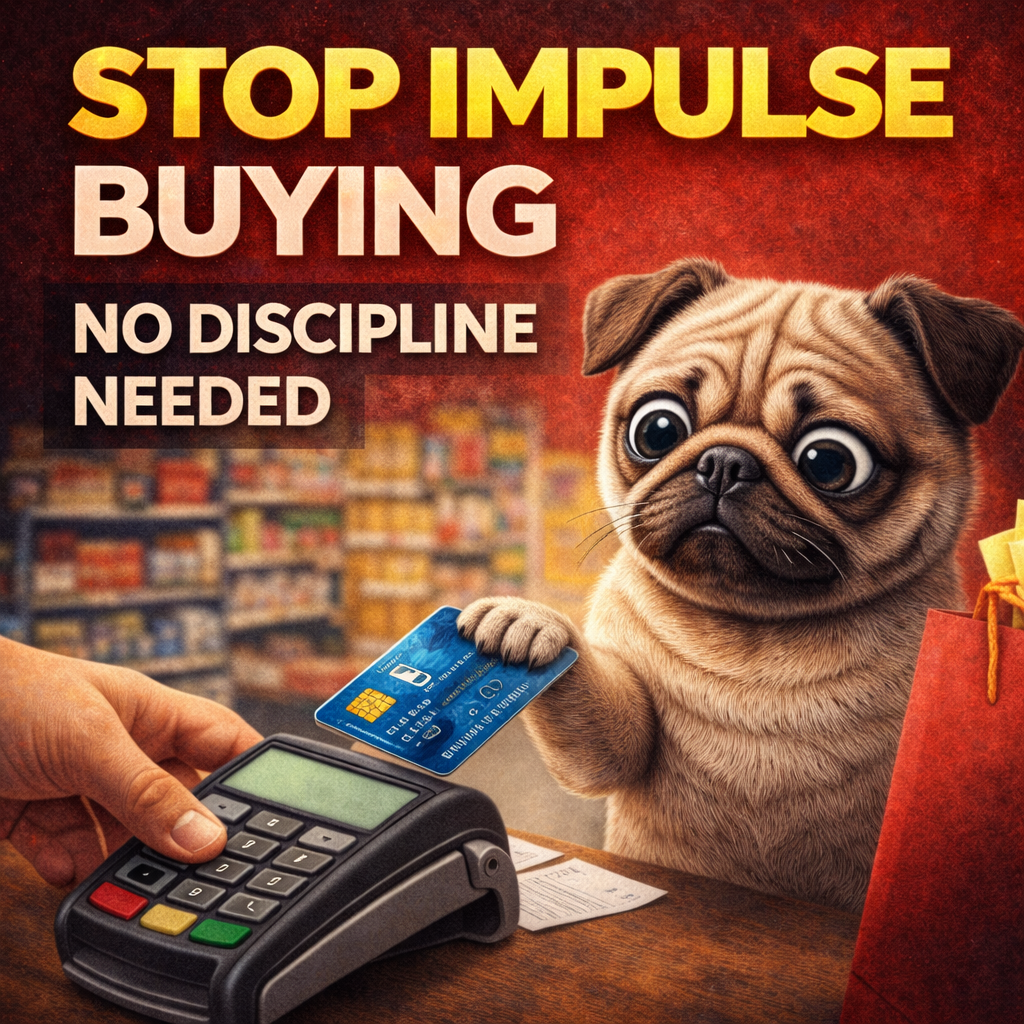
Most people think they have a discipline problem.
They don’t.
They have a system problem.
Why impulse spending feels uncontrollable
You don’t randomly spend money.
There’s always a trigger.
- Bored
- Stressed
- Tired
- Rewarding yourself
Spending becomes automatic.
Not because you’re weak.
Because your environment allows it.
The real problem: no pause
Impulse spending happens in seconds.
See → Want → Buy
No gap.
No thinking.
No resistance.
⚠️ Quick Check
Think about your last purchase.
Did you plan it?
Or did it just happen?
If it “just happened,”
that’s impulse spending.
Step 1: Create a delay
This is the simplest fix.
Before buying anything:
👉 wait 24 hours
That’s it.
Most urges disappear.
Step 2: Remove easy access
Make spending harder.
- Remove saved cards
- Log out of shopping apps
- Don’t keep payment info stored
More friction = fewer mistakes.
Step 3: Replace the habit
You can’t just stop spending.
You need a replacement.
Example:
- Want to buy something → transfer money to savings
- Feel stressed → go for a walk
- Bored → do something else
Same trigger.
Different action.
https://simplecostlife.com/50-30-20-rule-explained
Step 4: Track your triggers
Start noticing patterns.
When do you spend the most?
- Late night?
- After work?
- When you’re stressed?
Once you see it,
you can control it.
Step 5: Set a spending rule
Give yourself a boundary.
Example:
- “No purchases after 9PM”
- “No online shopping during weekdays”
Simple rules work better than complicated systems.
What changed for me
I used to spend small amounts without thinking.
Not big purchases.
Just random ones.
$5, $10, $15.
It didn’t feel serious.
But it added up.
Once I started pausing before buying,
I realized something:
Most of it wasn’t necessary.
I just didn’t give myself time to think.
Why this works
Impulse spending isn’t about money.
It’s about behavior.
If you control the moment,
you control the outcome.
What’s next
Now that you can stop spending impulsively,
the next step is understanding why saving still feels hard.
👉 That’s where most people get stuck.
Conclusion
You don’t need more discipline.
You need a system that slows you down.
Create a pause.
Remove access.
Replace the habit.
That’s how you win.